


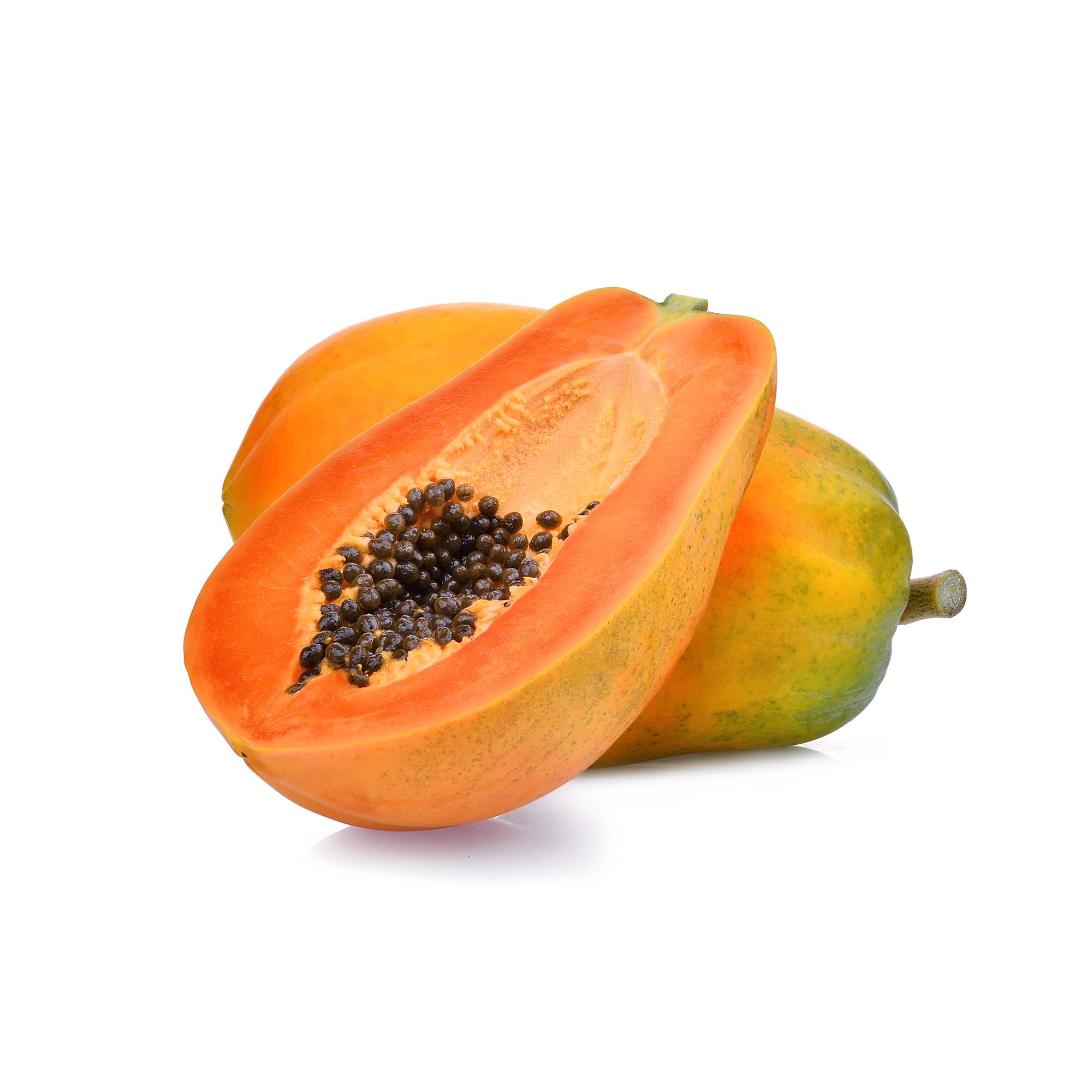
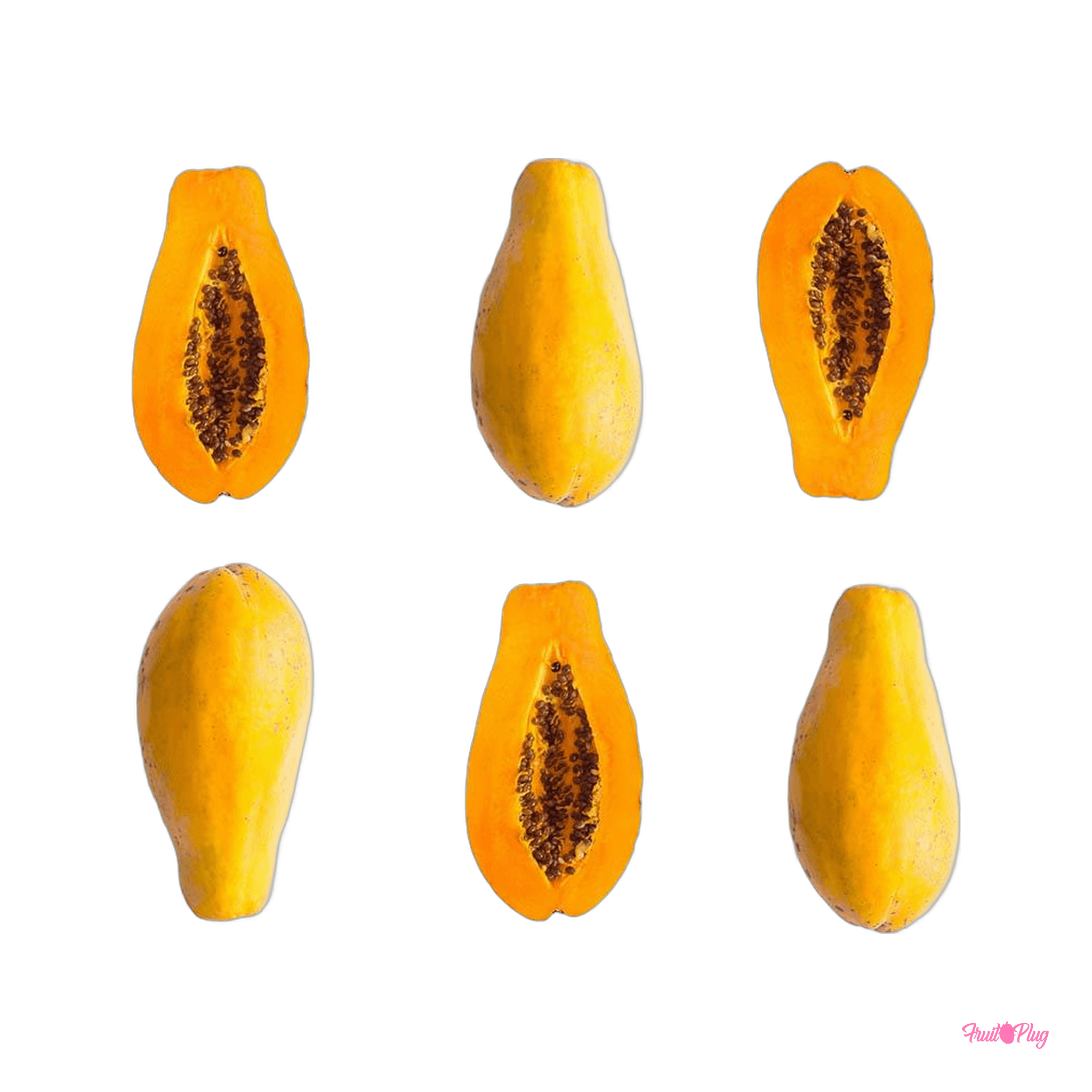
Halve, deseed, lime, spoon. A baby papaya is one breakfast, one bowl, one knife — vivid orange flesh, soft tropical sweetness, a faint musky aroma that lime turns into something brilliant. Smaller than the dinner-plate full-sized fruit, and far less of a kitchen project.
Ripening & storage
Climacteric — ripens off the tree- Ripeness cue
- Skin shifts from green to yellow-orange; gives slightly to thumb.
- Storage
- Room temp until coloured, then fridge for 2–3 days.
About Baby papaya
Baby papaya (Carica papaya, smaller cultivars often grown for export) is the manageable, sweeter version of the dinner-plate papaya you'll find in Caribbean and West African kitchens. Each fruit weighs around 500g, fits in one hand, and is the right size for a single breakfast portion.
The flesh is vivid orange, soft, and richly aromatic — a clean tropical sweetness with a slight musky undertone that some people love and some people fix with lime. The black seeds in the central cavity are edible, with a peppery bite, but most people scoop them out before eating. Papain — papaya's signature enzyme — is what gives the fruit its meat-tenderising reputation.
Look for skin that's gone from green to yellow-orange and gives slightly to pressure. Halve lengthways, scoop out the seeds, squeeze lime generously, eat with a spoon. Brilliant blended into smoothies; works in savoury salads with chilli, lime and prawns.
Did you know?
- Originated in Mesoamerica — southern Mexico and Central America — before Spanish traders carried it across the Old World tropics in the 16th century.
- Common red-fleshed cultivars include 'Maradol', 'Sunrise' and 'Caribbean Red'; smaller solo-type fruits sell as baby papayas.
- Green unripe papayas are rich in papain, a cysteine protease so powerful that indigenous cooks long used the flesh to tenderise meat.
Sources: Wikipedia
How to eat
Below are the general steps that work across most kitchens. The description above is the source of truth for any cultivar-specific detail — cross-check before you cut.
1. Check ripeness
Use the cues in the description above. As a rule, exotic fruits do most of their ripening off the tree — give them a day or two at room temperature if they feel firmer than expected.
2. Wash and chill
Rinse under cold water, pat dry, and chill before serving. Cold flesh holds shape better when sliced and brings the aromatic notes forward.
3. Cut, scoop or peel
Follow the technique described above. If in doubt, halve crosswise with a sharp knife and taste a spoonful before committing to a full prep.
4. Pair simply
A squeeze of lime, a pinch of salt, or a drizzle of honey will lift almost any tropical fruit. Match strong cheese, cured meats or yoghurt for a board; keep flavours minimal when the fruit is the star.
From the Papaya family: Squeeze lime over the flesh — it amplifies the sweetness and tames the slight musk note older papayas can carry.
Buy this fruit
Sourced ripe and graded by hand. UK next-day delivery on every order placed before the daily cutoff.