

Welcome to the Tropics
Flavour profile
Every fruit we source with a sweet flavour profile. 36 fruits — click through for the preparation guide and current UK season.
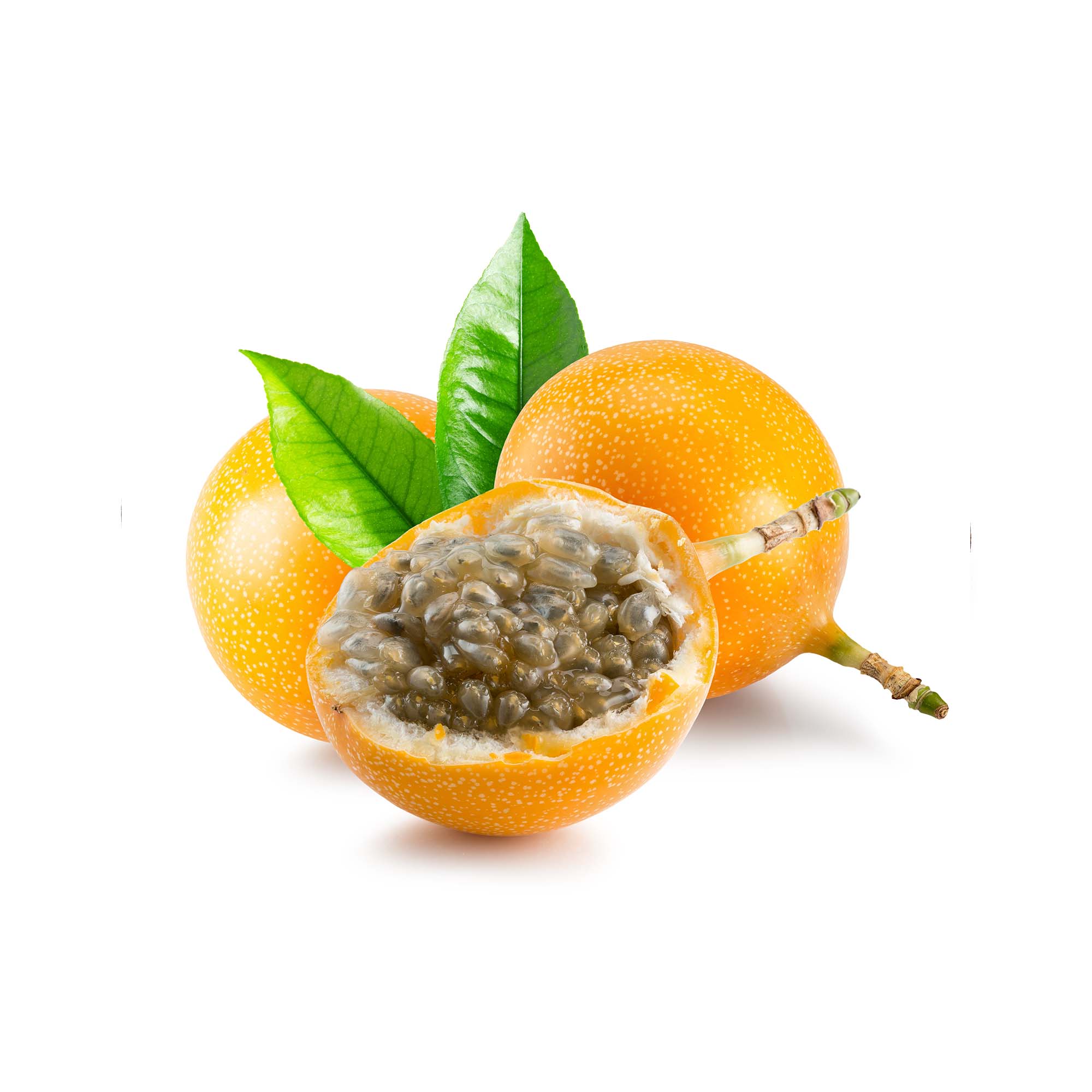
An orange passion fruit on the outside, a gentler animal on the inside. The brittle shell cracks like an egg to reveal grey-translucent jelly around crunchy black seeds — sweet, honeyed, floral, with almost none of the tartness of its cousins. The dessert passion fruit.
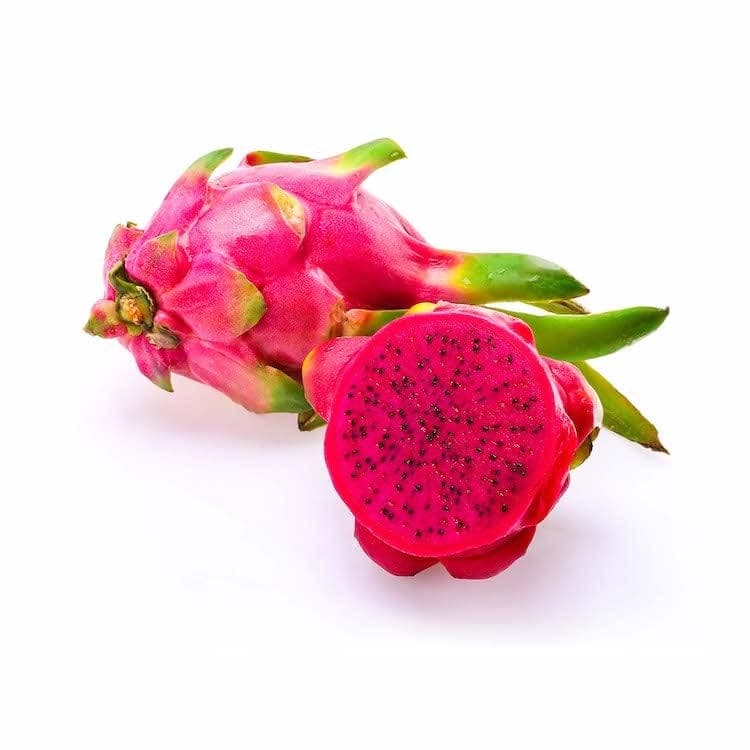
Pink leathery skin, then magenta flesh so saturated it stains the chopping board. Of all the dragon fruits this one carries the most flavour — kiwi, watermelon and a hint of sweet beetroot, with crunchy black seeds dotted through. Cold from the fridge it eats like sorbet you didn't have to make.
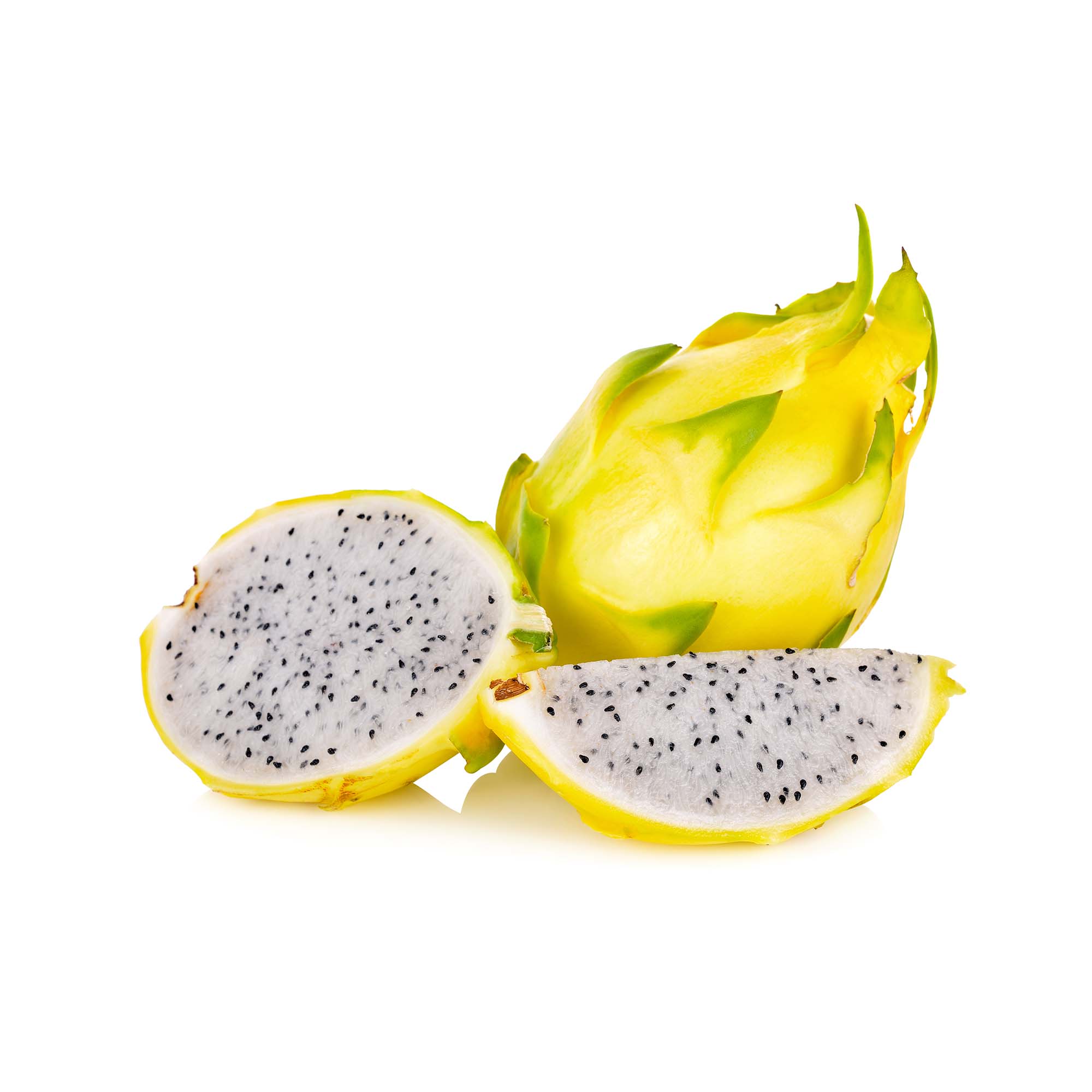
The most sugar-forward of the dragon-fruit clan. Knobbled yellow skin opens to white flesh studded with black seeds — denser than the red, sweeter than the white, with a clean honey-pear finish. The one to reach for when you want pitaya without the vegetal note.
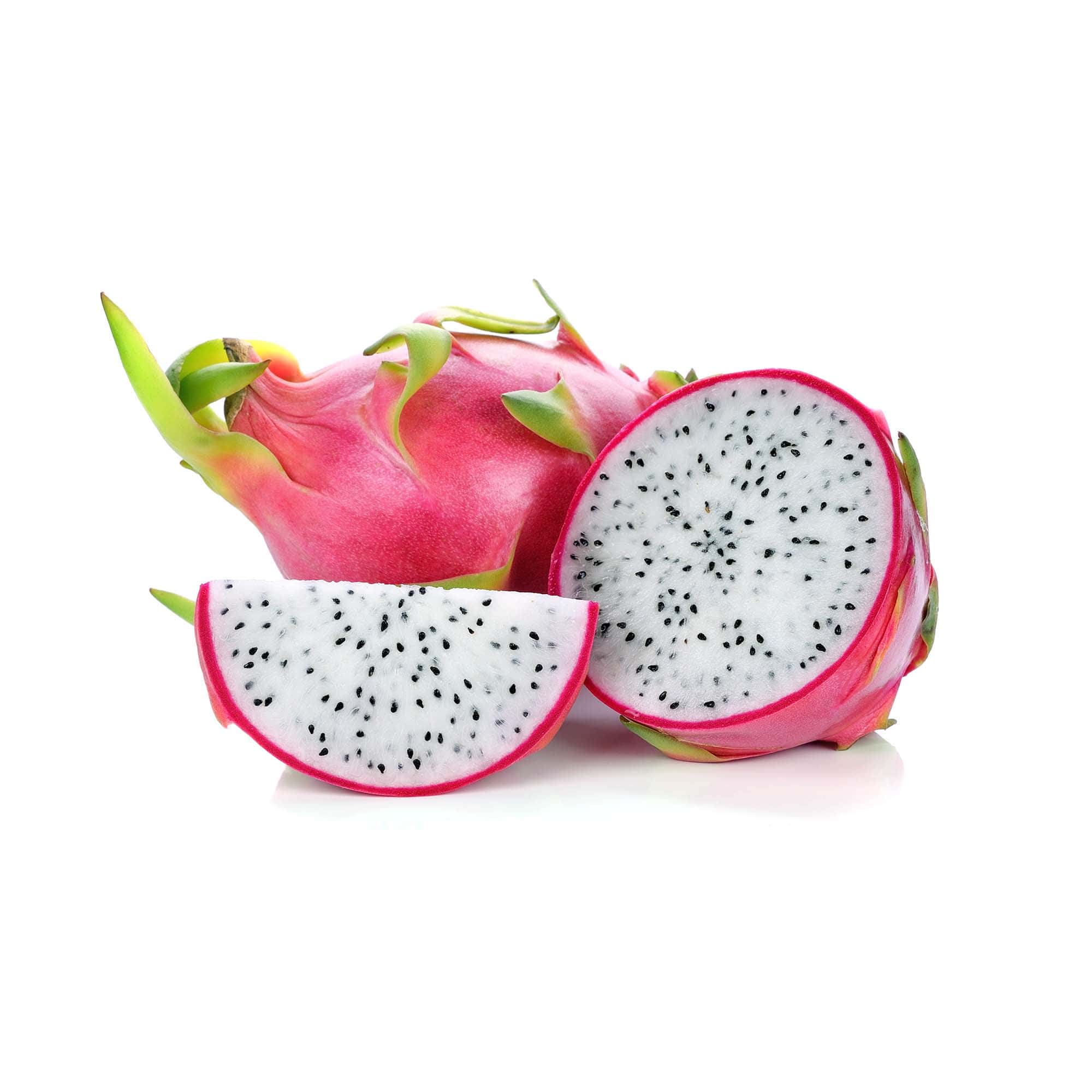
Hot-pink rind, snow-white flesh, jet-black seeds. The mildest pitaya of the three — clean, refreshing, gently sweet, a touch melon. Built for fruit plates, smoothie bowls, and any photo that needs a contrast hit. Travels well, holds shape when cubed.
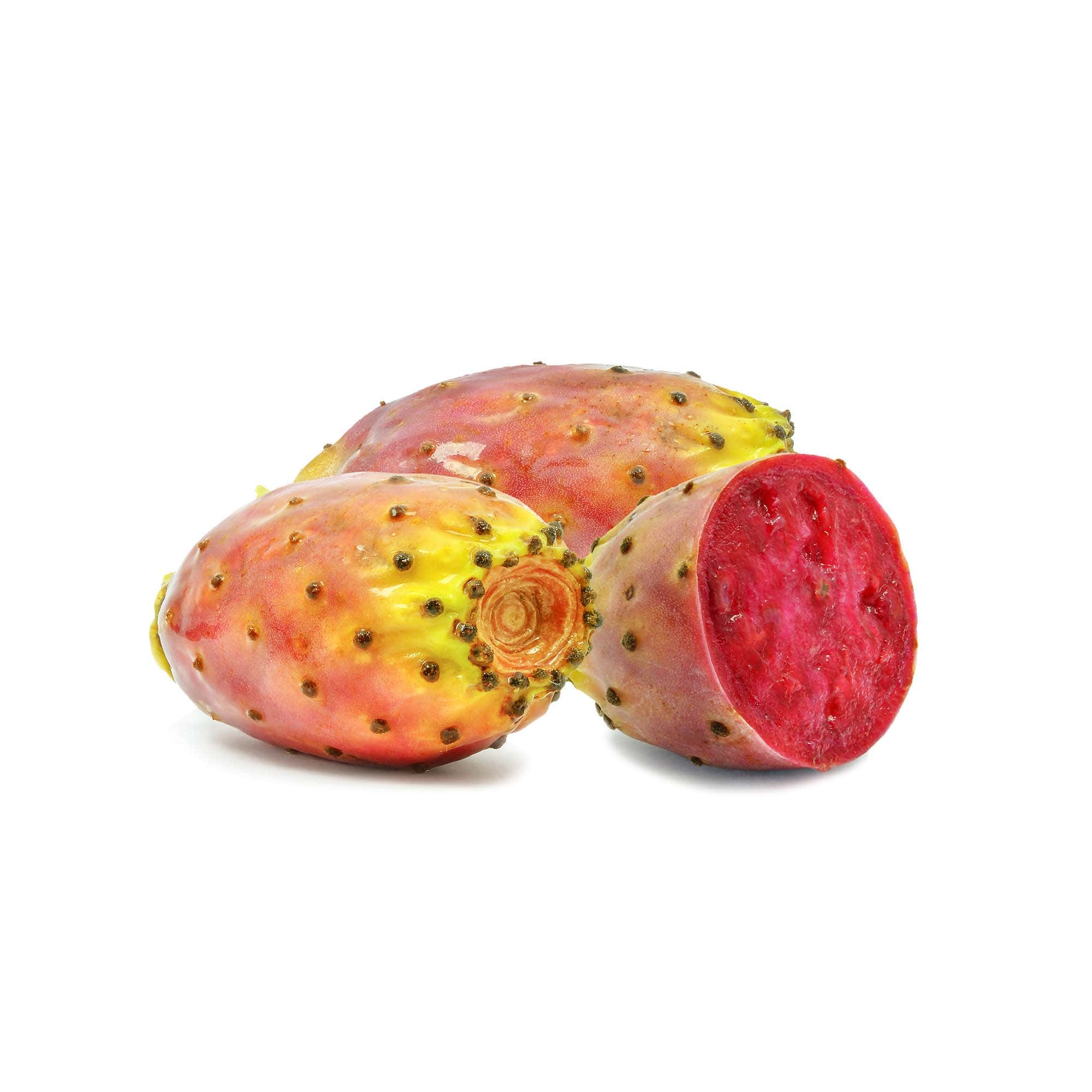
Known as tuna across Mexico. Watermelon meets strawberry meets a clean, earthy sweetness, with hard seeds you swallow rather than chew. Handle with a tea towel — even when the visible spines are gone, the glochids will catch you. Worth it for the colour alone.
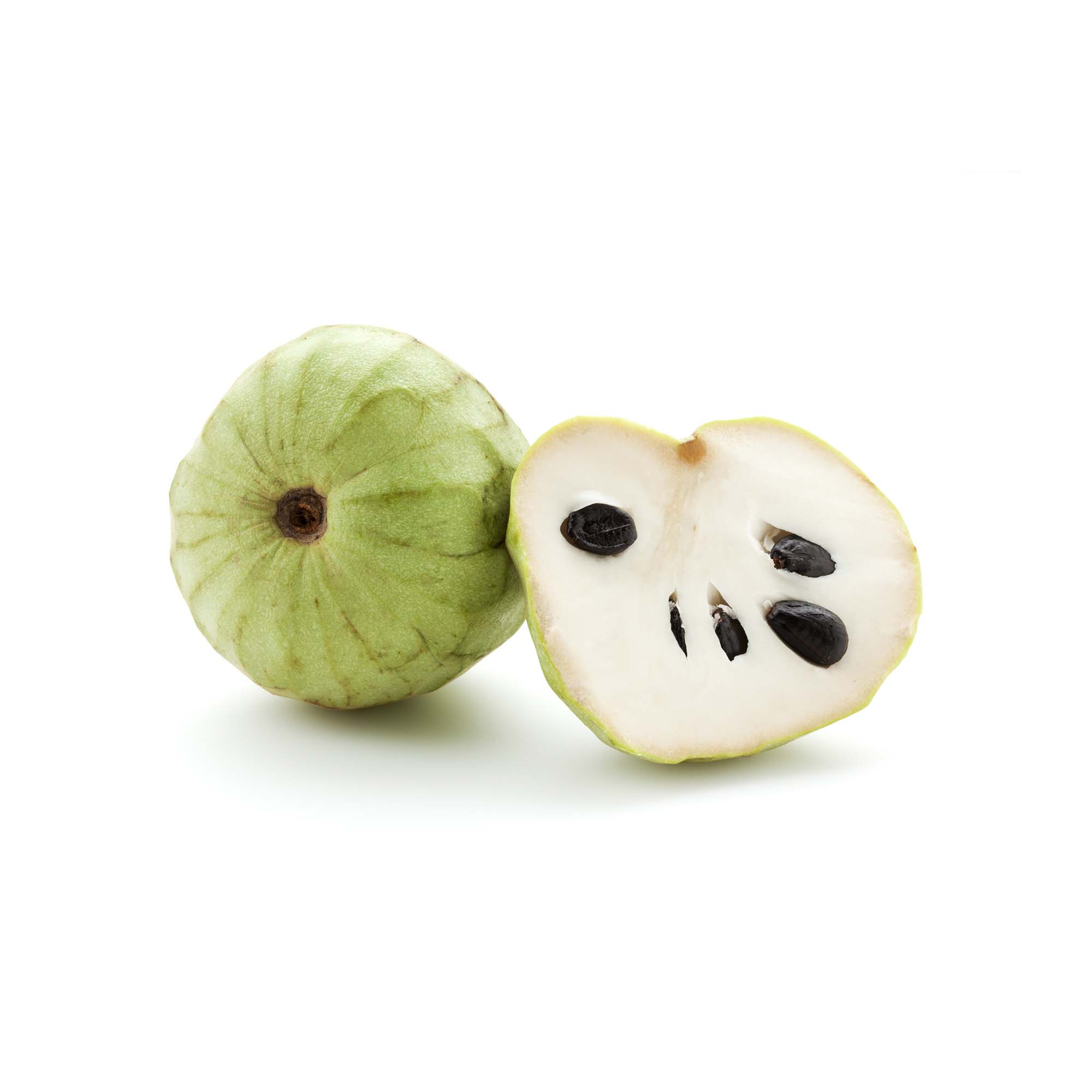
Lumpy heart-shaped skin, white flesh inside that scoops out like cold custard. Ripe, it's pure dessert with zero processing — sweet, creamy, faintly tropical, with seeds you spit aside as you go. Chill before eating; warm custard apple is half the fruit it should be.
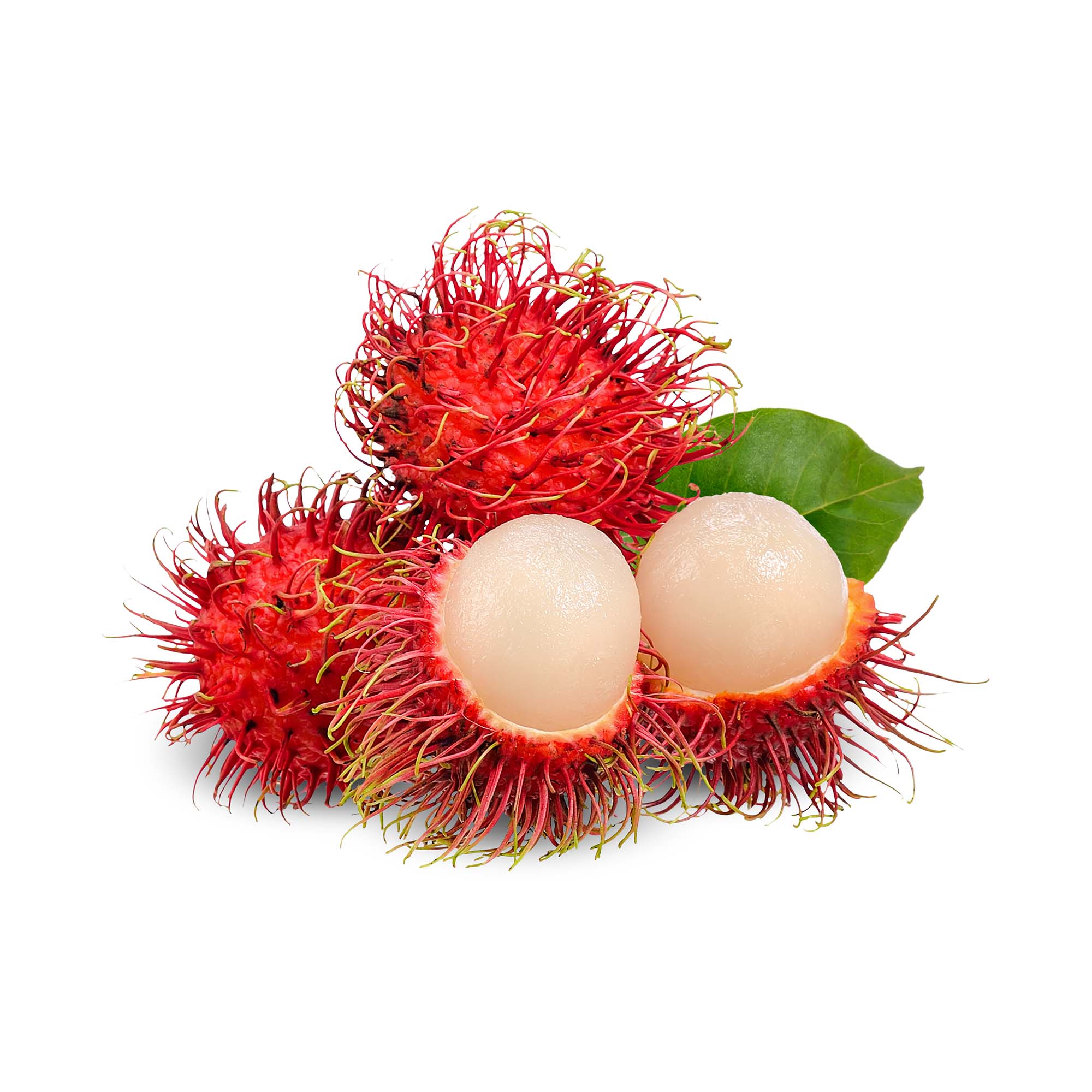
A red shell covered in soft hairs, peeled back to reveal translucent grape-like flesh around a single seed. The flavour is lychee turned a half-step softer — sweeter, jucier, gentler on the rose perfume. If lychee is a soprano, rambutan is the alto.
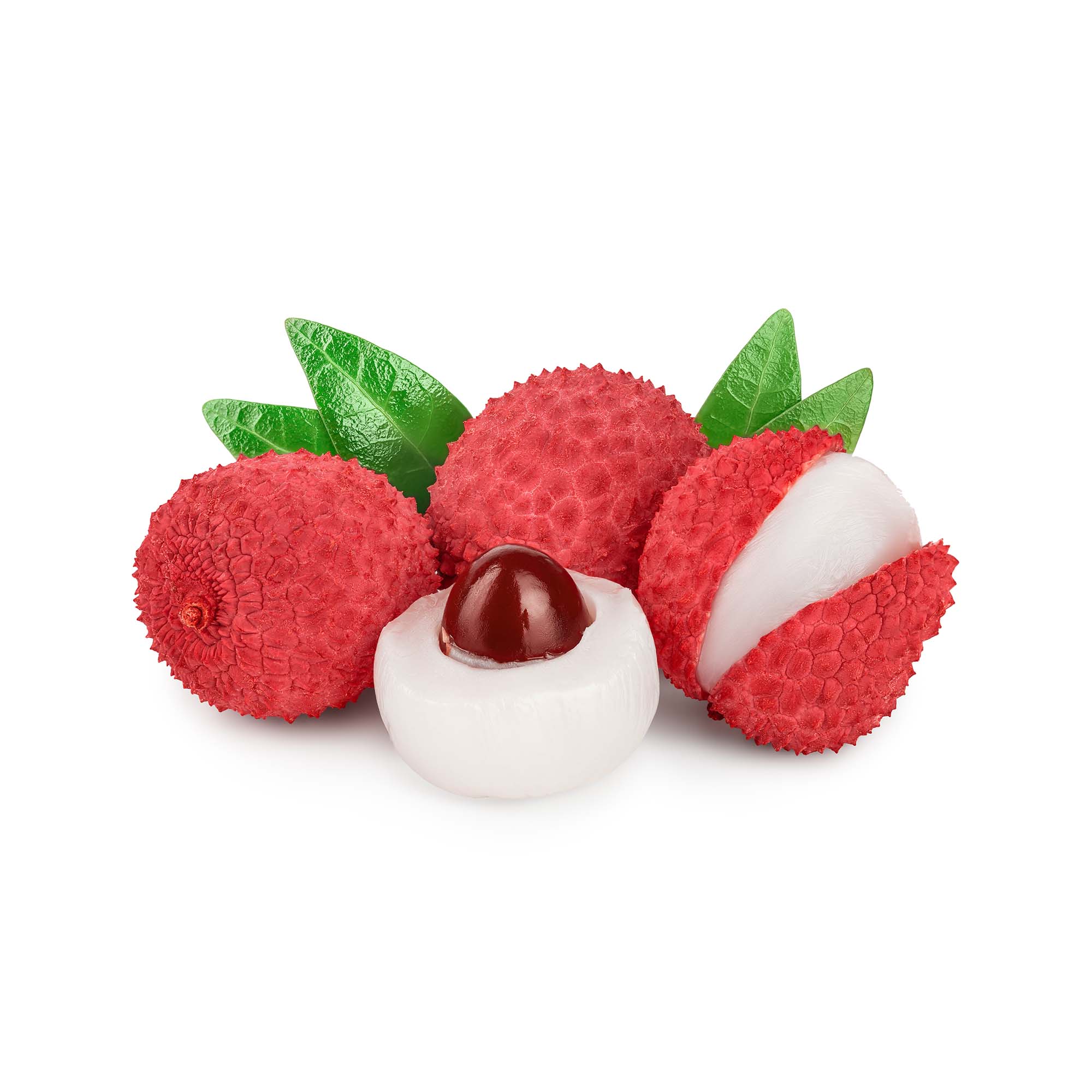
The rose-scented summer classic. A pink, knobbled shell cracks under a thumbnail to release translucent flesh around a polished mahogany seed. Sweet, floral, perfumed — the fresh fruit eats nothing like the tinned version most people grew up with. Eat cold, eat fast.
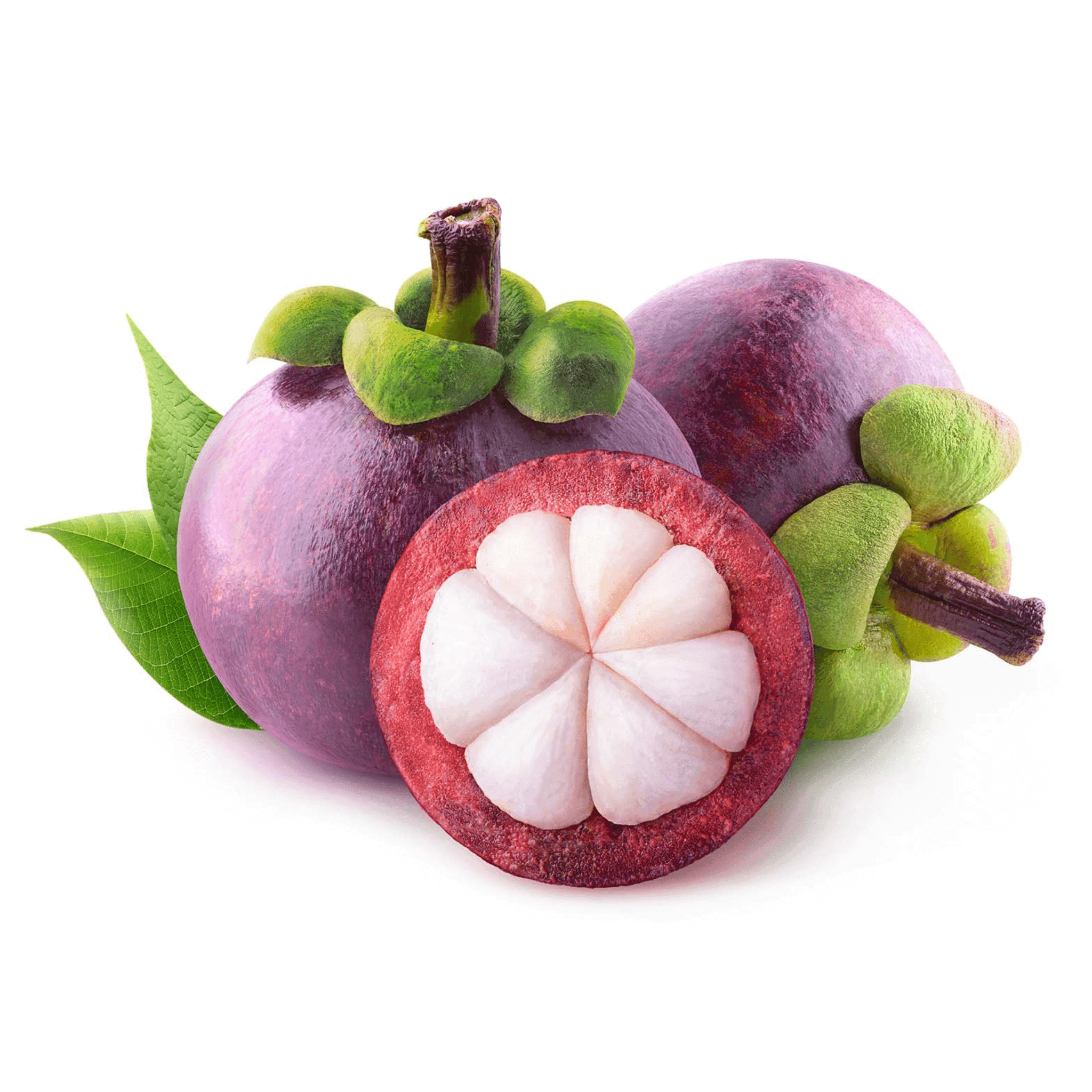
The queen of fruits, and she earns the title every time. A dense port-purple shell, snow-white segments arranged like garlic cloves, a flavour that sits between lychee, peach and perfumed sorbet. Banned fresh in the US for decades — eat one and you'll understand why people went to the trouble.
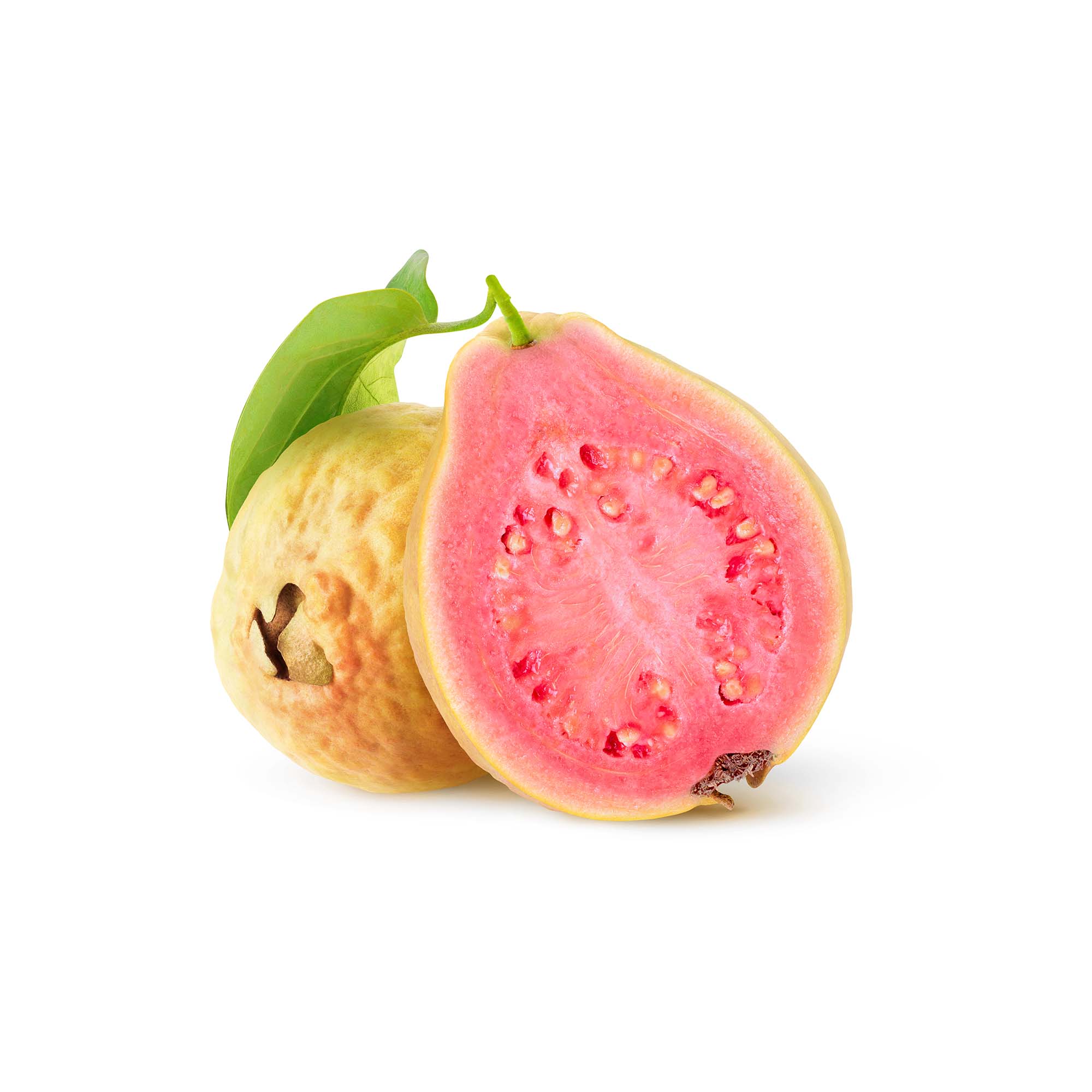
Pale green skin, hot-pink centre. The aroma walks into the room before the fruit does — tropical, floral, faintly musky. Eat skin and all, seeds and all; the seeds are crunchy and entirely edible. Vitamin-C density that puts oranges in the shade, and a flavour you can taste at three paces.
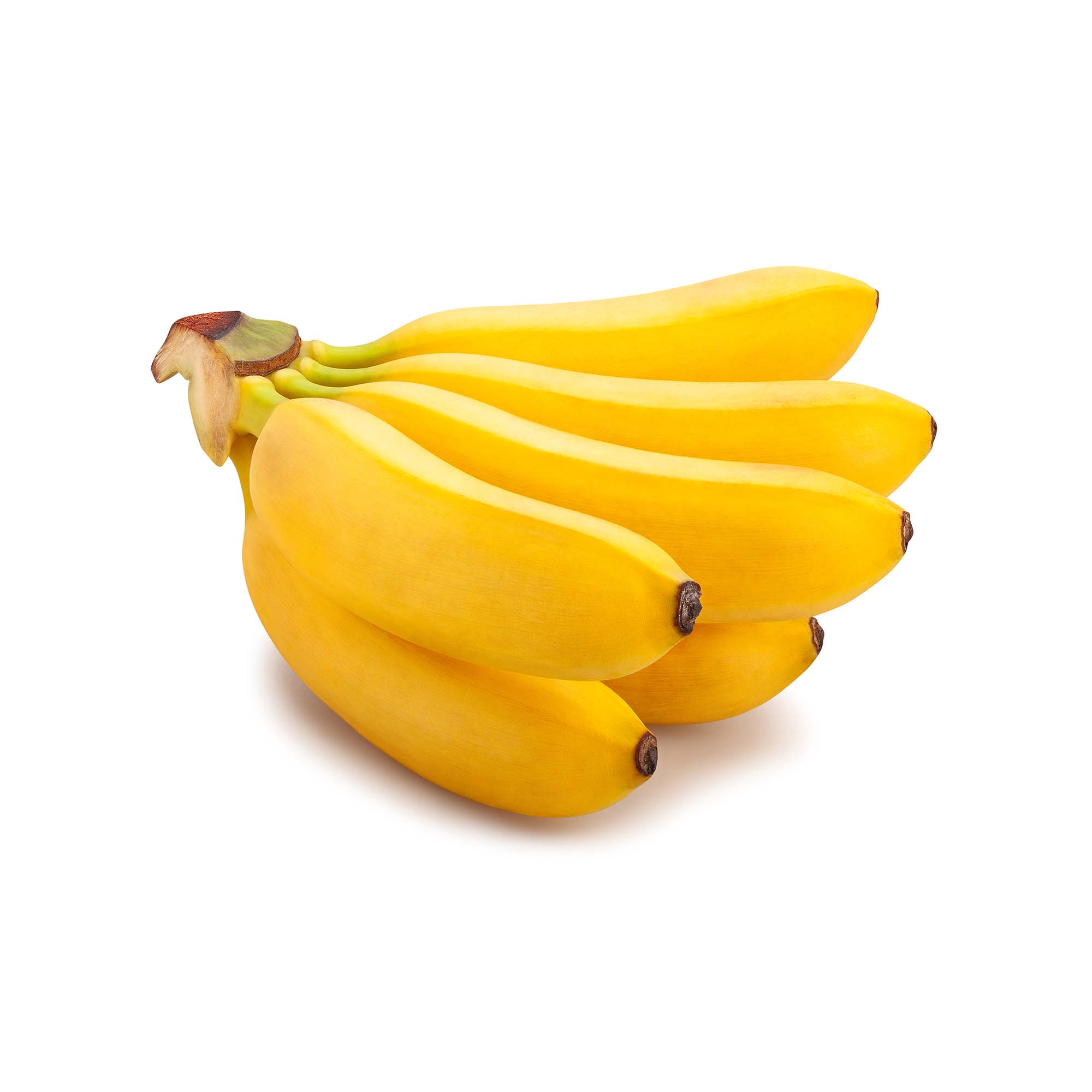
Around four inches long and engineered for a single hand. Creamier than a Cavendish, more honeyed, with a denser texture that holds its shape when sliced. The whole fruit is one perfect bite — and once you've eaten one you'll resent every supermarket banana you ever ate before.
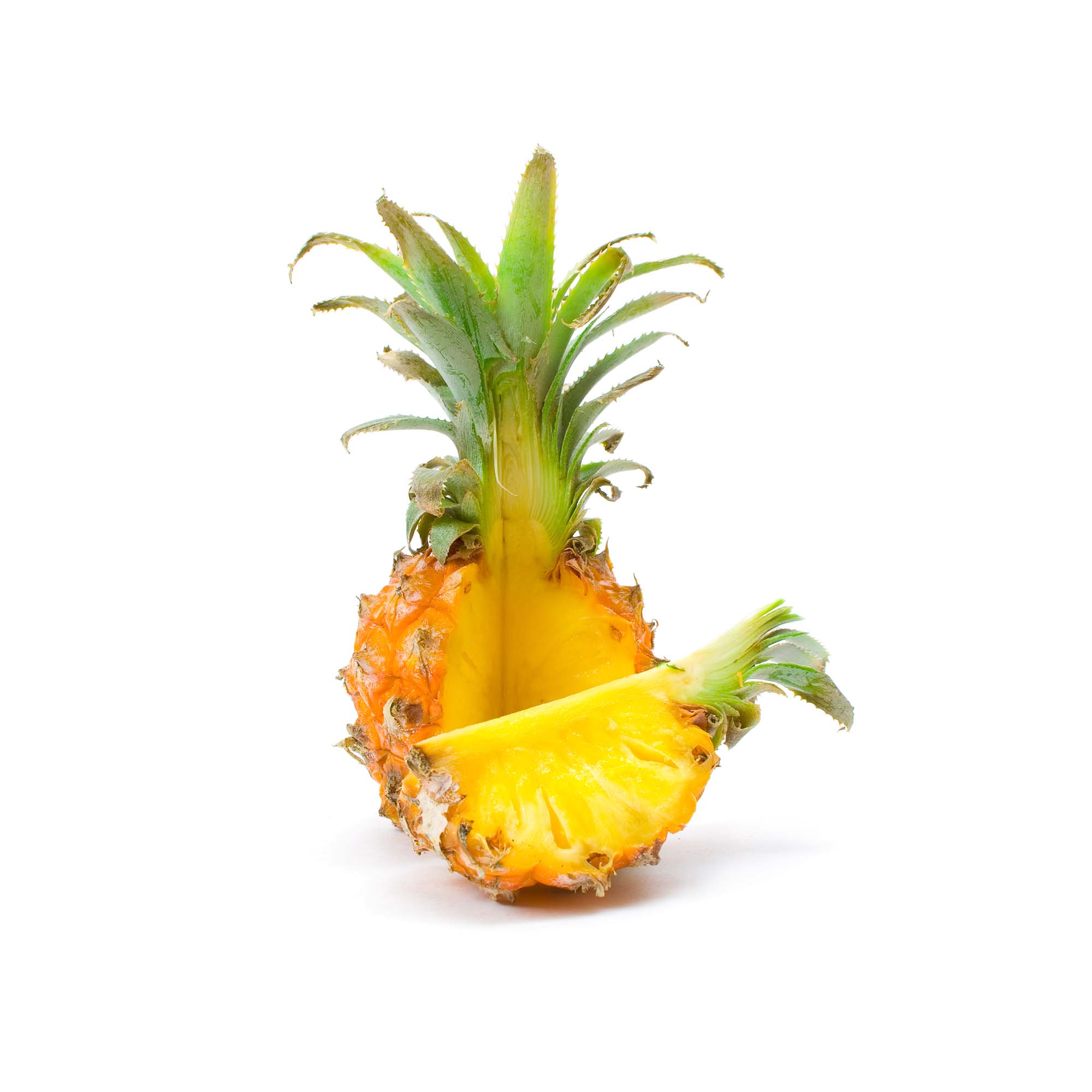
Entirely edible — core included. Sweeter, softer, lower-acid than the full-sized pineapple, and small enough that one fruit serves two people without leftovers. The crown is decorative, the flesh is dessert-grade, and the core is tender enough to eat without the wedge-and-discard ceremony.
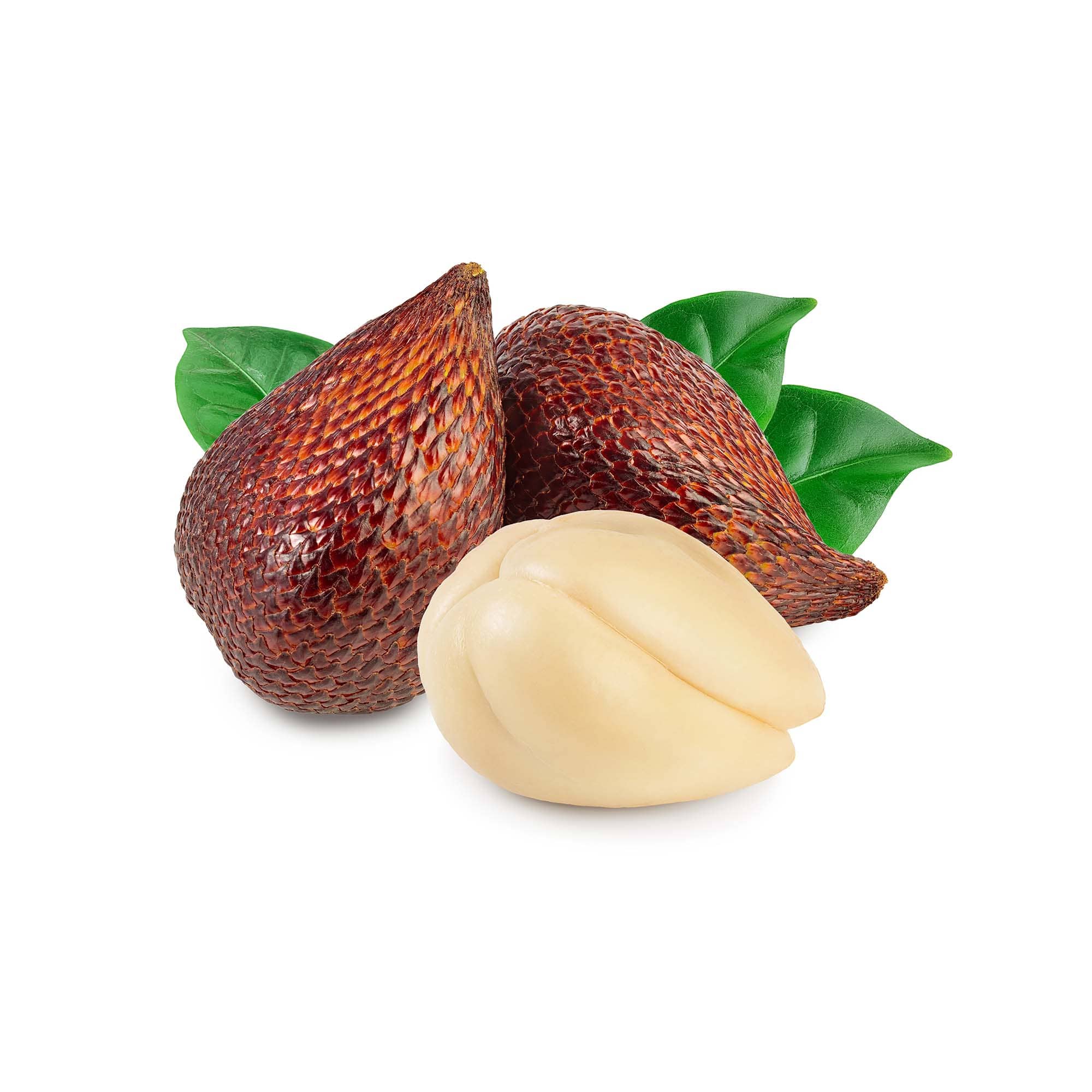
Skin like reptile scale, flesh inside that crunches like apple. The flavour is unlike anything else — pineapple, molasses, a faint vanilla, with a clean tartness running underneath. Confronting on first sight, addictive on second bite. The Indonesian palm fruit you'll either love or pass to your braver friend.
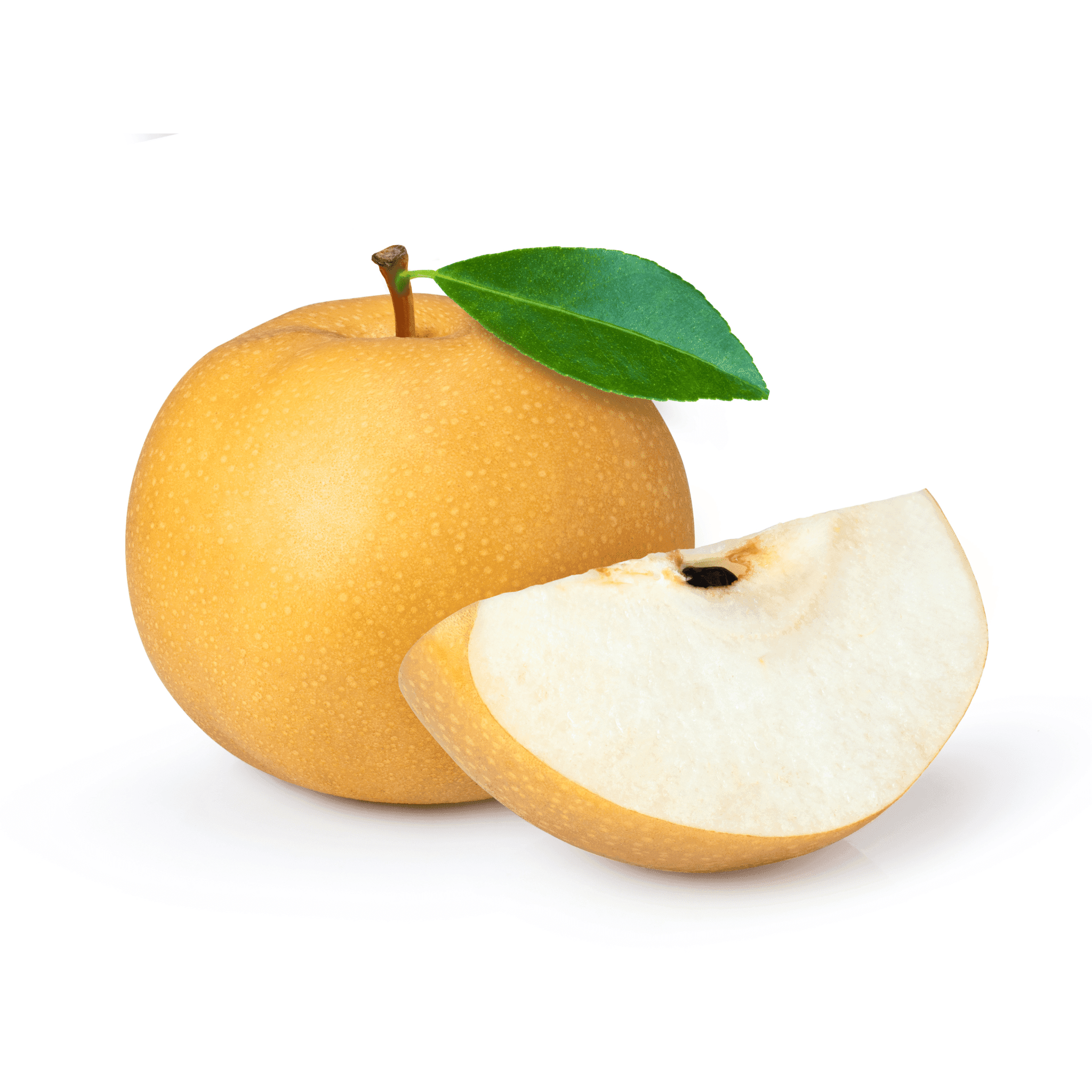
Round like an apple, snap-crisp like a water-rich pear, with a juice content that surprises everyone the first time. Mild floral sweetness, no graininess, no ripening waiting game — nashi is firm when it's at its best. Eat cold, unpeeled, or pair with blue cheese and a thin slice of prosciutto.
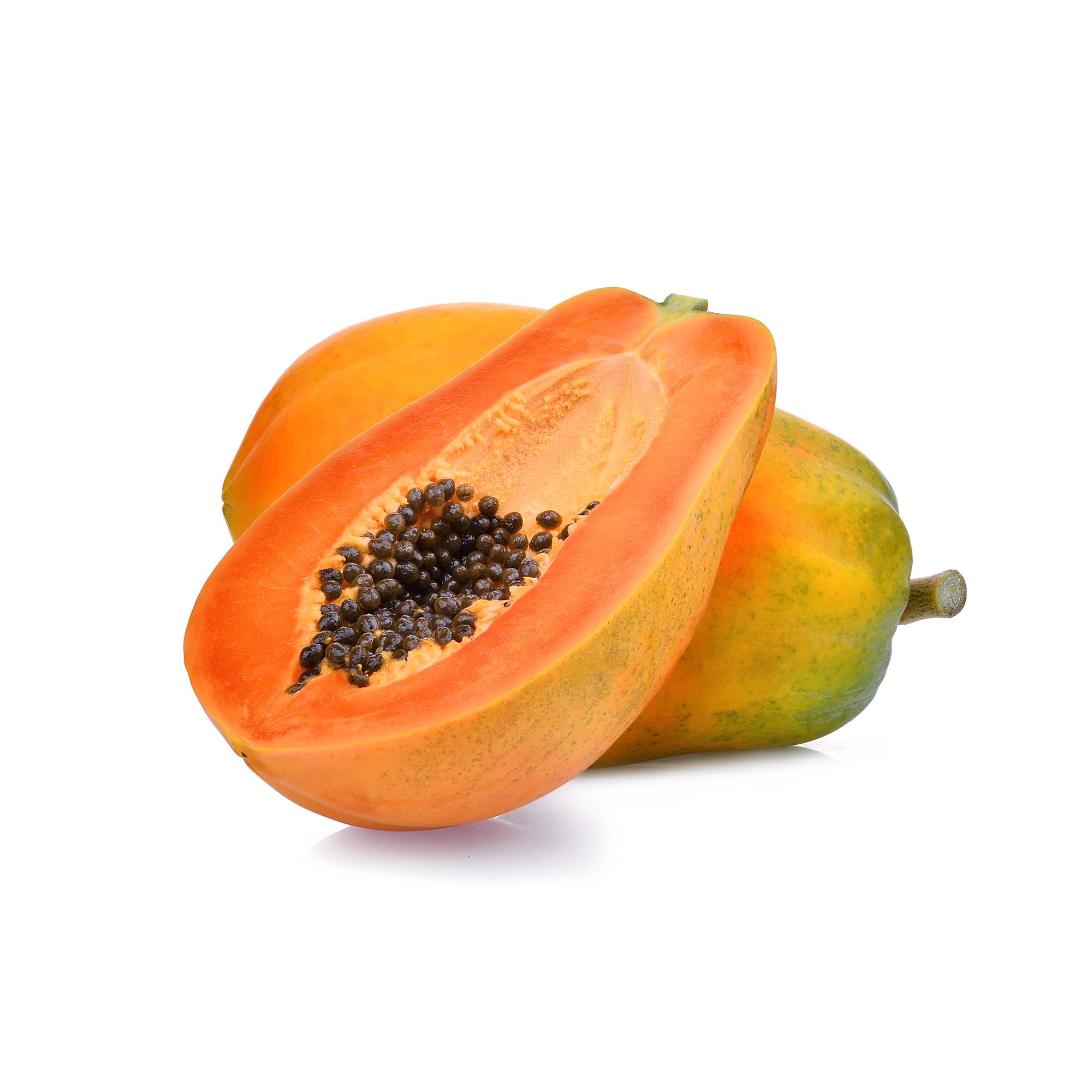
Halve, deseed, lime, spoon. A baby papaya is one breakfast, one bowl, one knife — vivid orange flesh, soft tropical sweetness, a faint musky aroma that lime turns into something brilliant. Smaller than the dinner-plate full-sized fruit, and far less of a kitchen project.
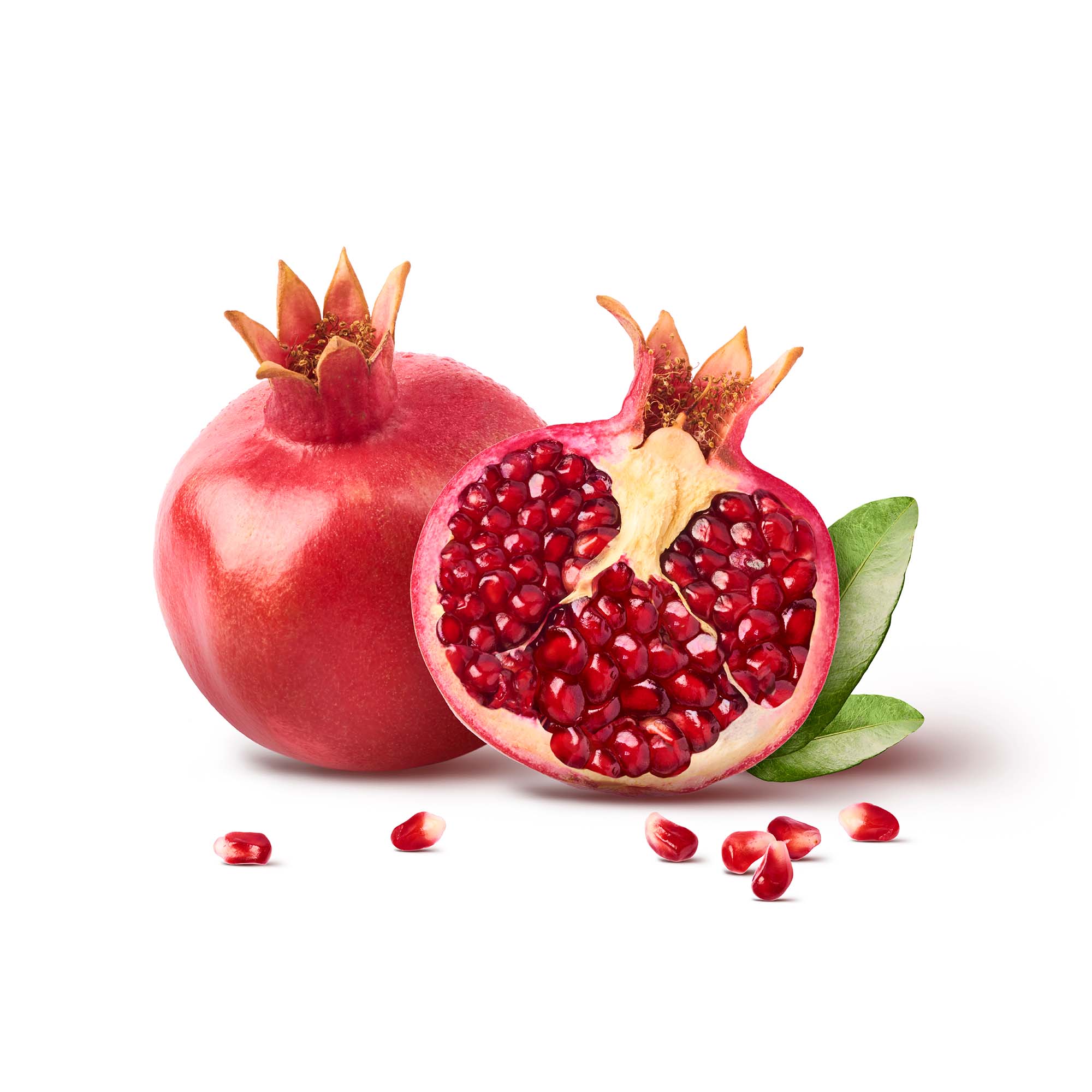
Hundreds of jewel-bright arils packed wall-to-wall under a leathery rind. Each one cracks between teeth into sweet-tart juice and a crunchy seed. The fruit that's been around since the Bronze Age — and there's a reason it's never gone out of fashion.
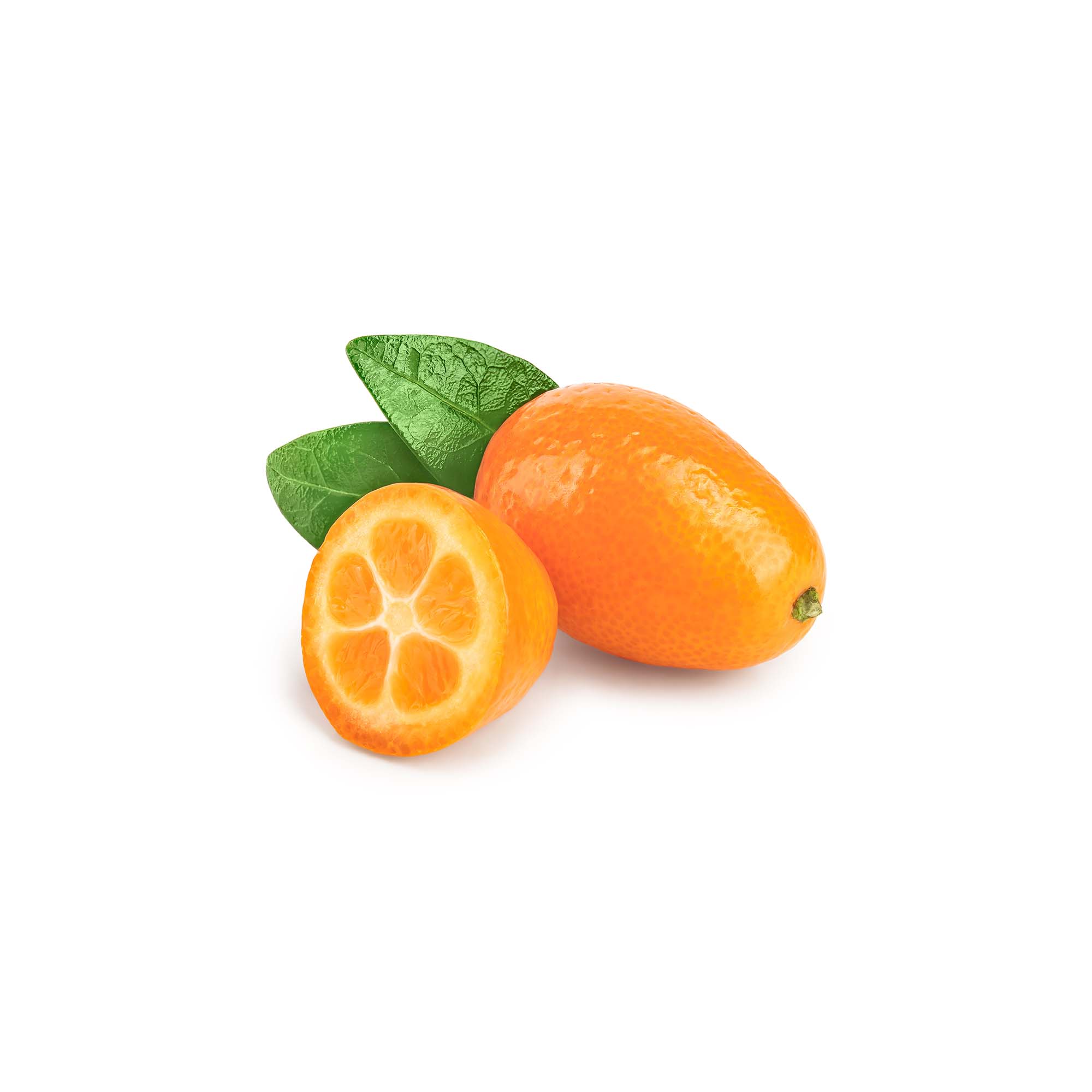
The whole-fruit citrus. Sweet skin, tart flesh, the most balanced bite of citrus you'll ever take — and the whole thing eaten in one go, no peeling, no fuss. Squeeze gently between finger and thumb before biting; that single press mingles peel oil and pulp on the first crunch.
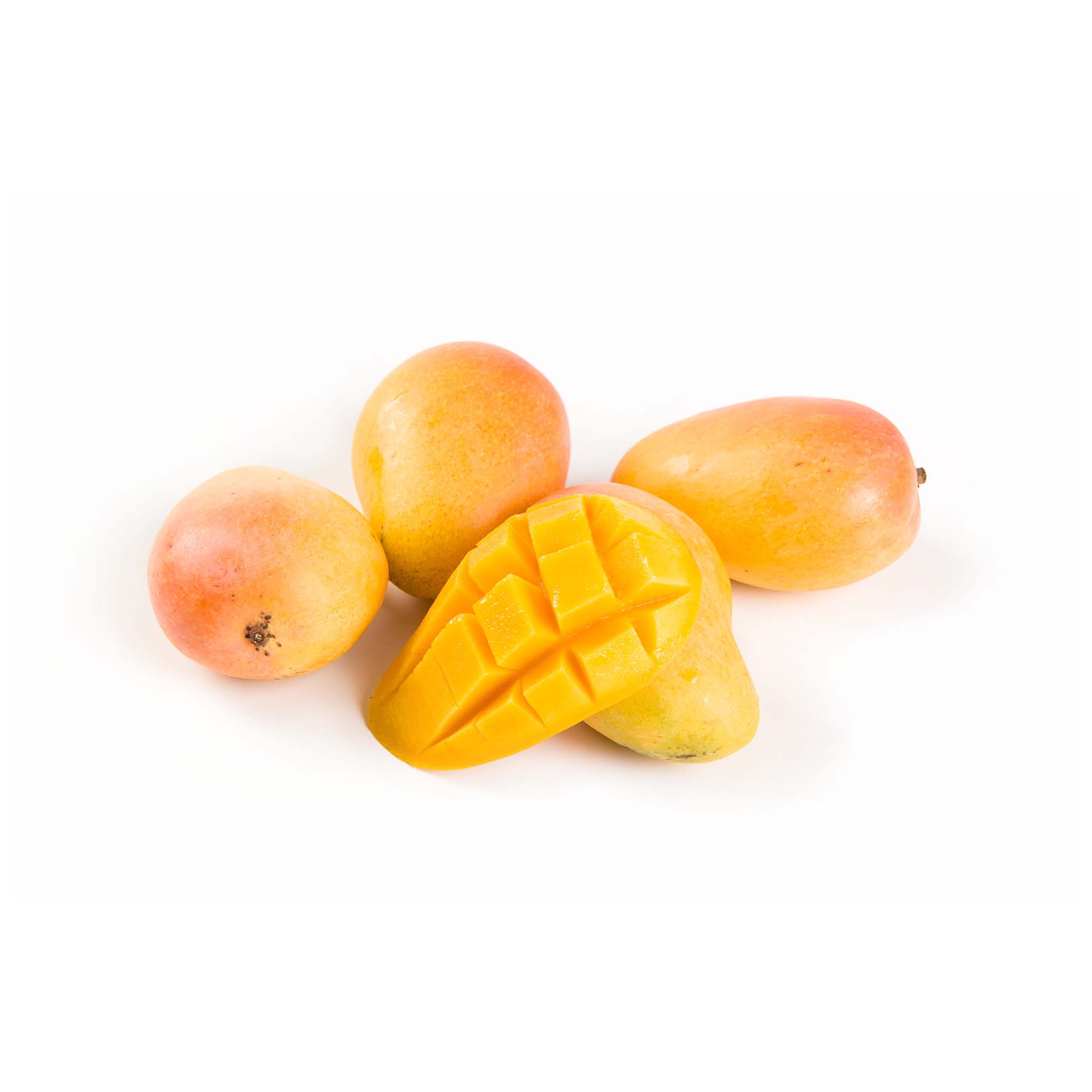
Alphonso-style: smaller, less fibrous, deeper orange, more aromatic. The mango people compare every other mango to. Score, scoop, eat — or halve and spoon out cold. One ripe baby mango is one breakfast, one dessert, or one of the better small decisions you'll make this week.
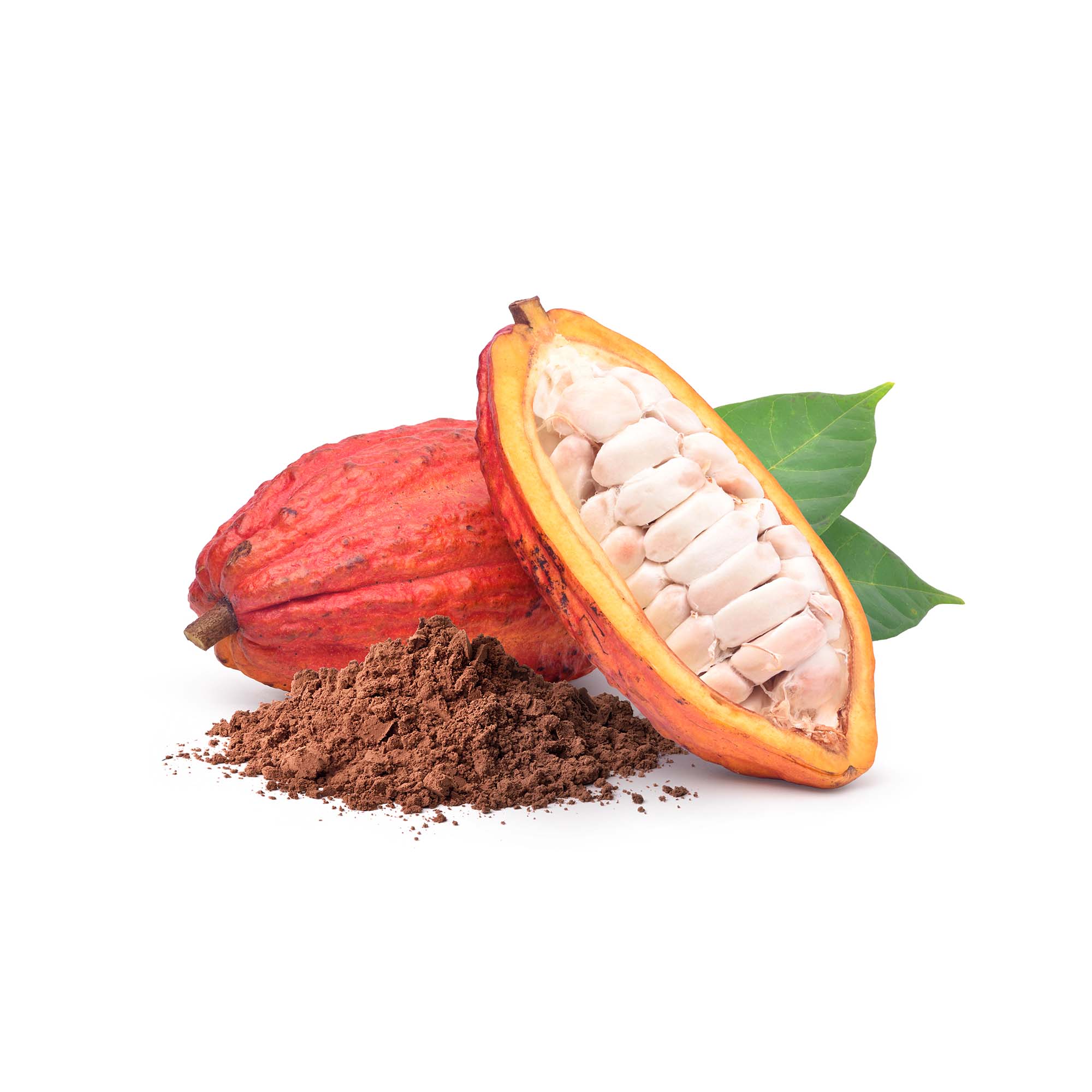
The original chocolate, in its raw form. Long ridged pods open onto sweet white pulp wrapped around the beans — the pulp eats like lychee sorbet, the beans are what becomes chocolate once they're fermented and roasted. Rarely seen outside the cacao belt, almost never sold whole in the UK.
 Premium
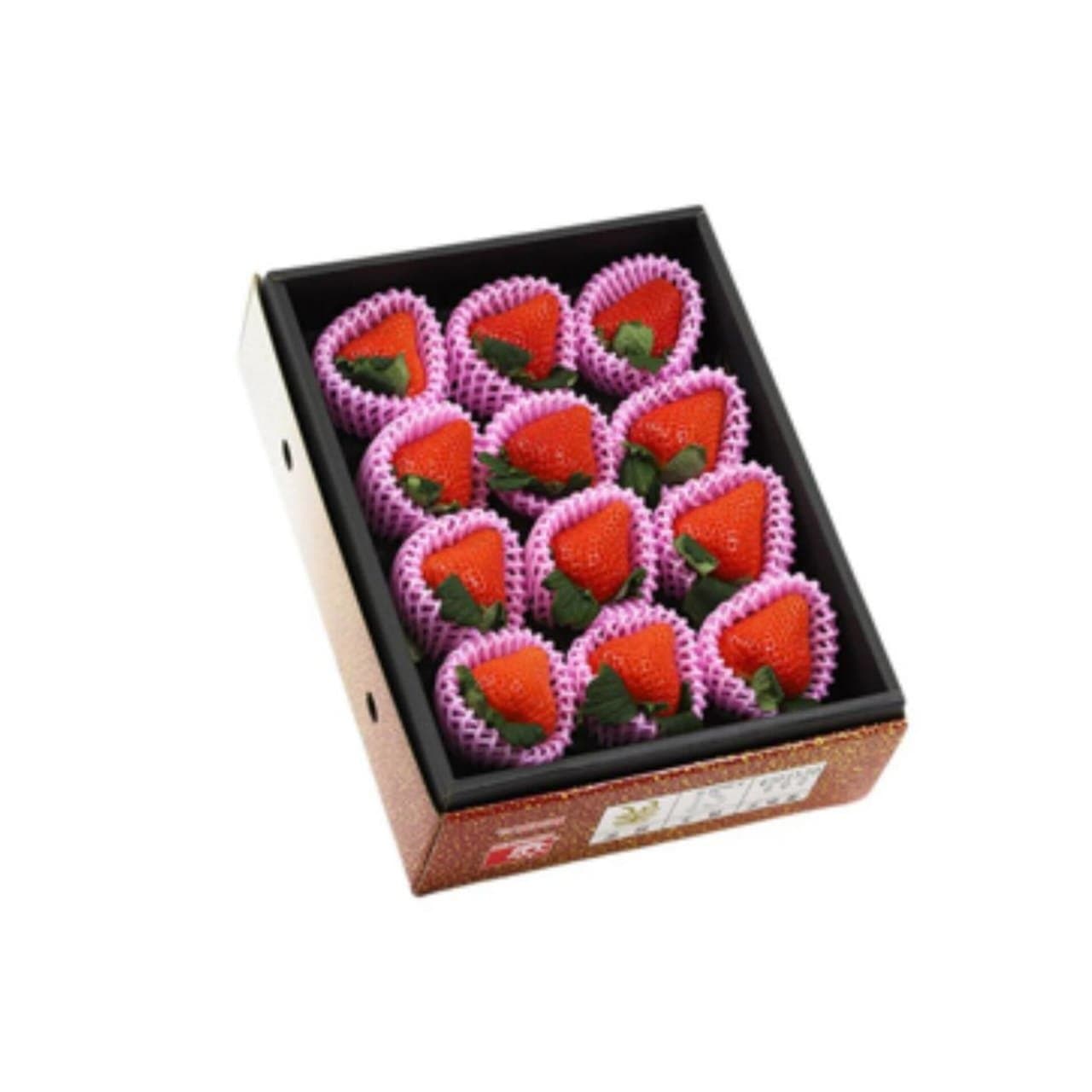
Japan's largest premium strawberry — each berry the size of a small peach, individually graded, individually wrapped. Deeply sweet, low in acid, with a perfumed finish that tastes engineered, because it is. Selected from Miyazaki growers and flown in to land in punnets the same week.
 Premium
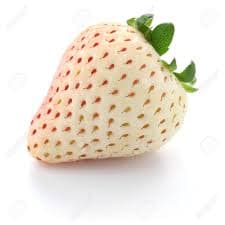
Cultivated on Shikoku and selected for honey-sweetness over size. Barely acidic, intensely hydrated — bite into one and the juice runs down your wrist. A quieter, more elegant Japanese strawberry than the Okimi headliner, and the one many Japanese eaters quietly prefer.
 Premium
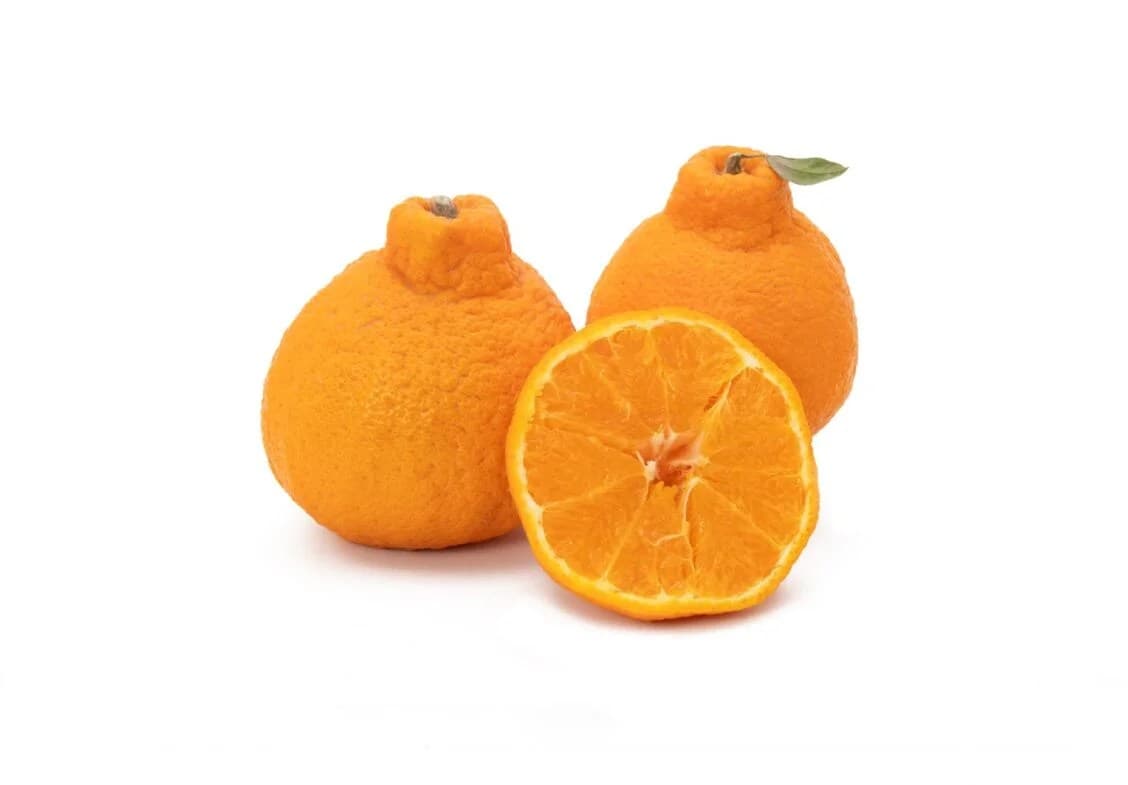
A seedless, bump-topped Japanese mandarin originally bred in Kumamoto and selected for maximum sweetness. The skin lifts off in one pull; the flesh inside reads as the richest orange you've ever had — concentrated sugar, low acid, and the cleanest citrus aroma in the family.
 Premium
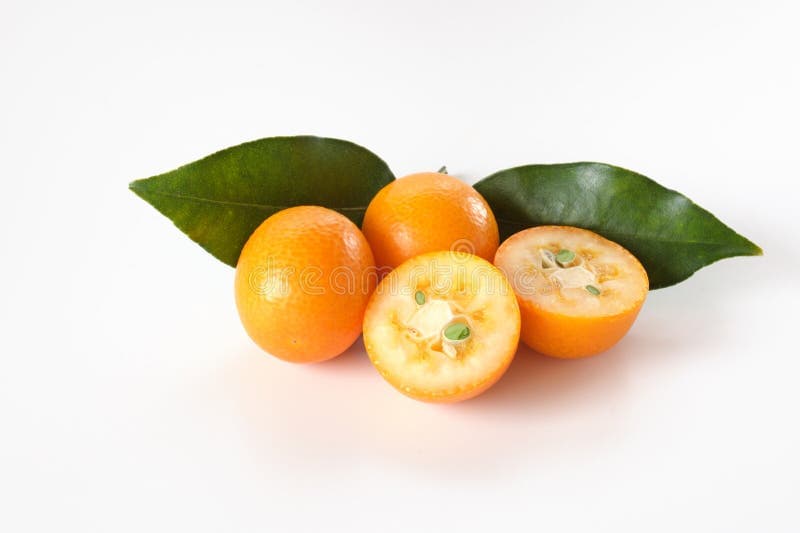
Bigger and meaningfully sweeter than the supermarket kumquat — Japanese growers select for thin, candy-sweet peel and reduced acid in the flesh. Eat whole in one bite. The premium tier of a fruit that was already designed to be eaten skin and all.
 Premium
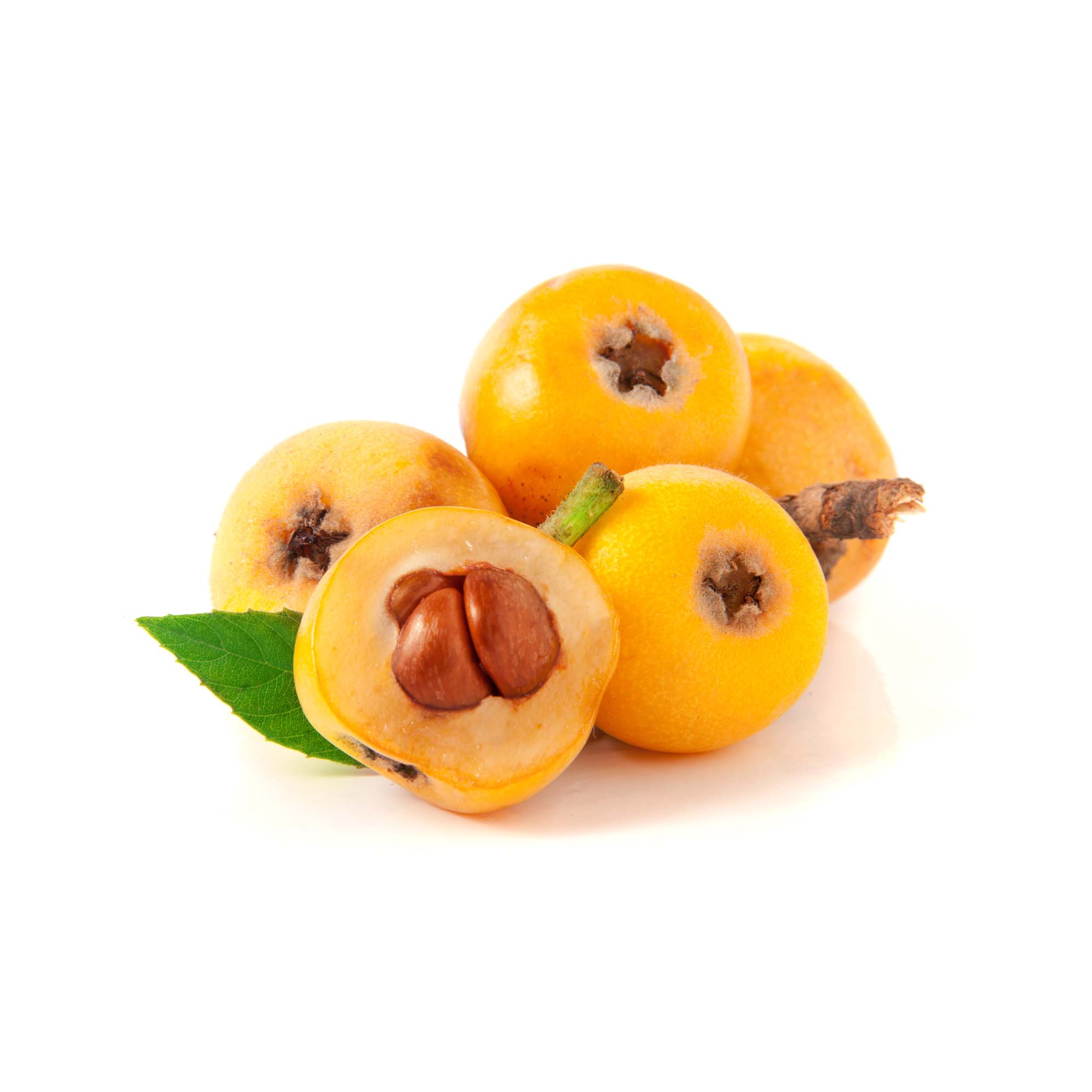
Apricot-gold fruit that only appears for a few weeks in late spring. Tastes somewhere between peach, mango and pear, with a clean floral edge and a juice content that overwhelms the small fruit it's hidden inside. Bruises if you look at it the wrong way — selected from gift-grade growers.
 Premium
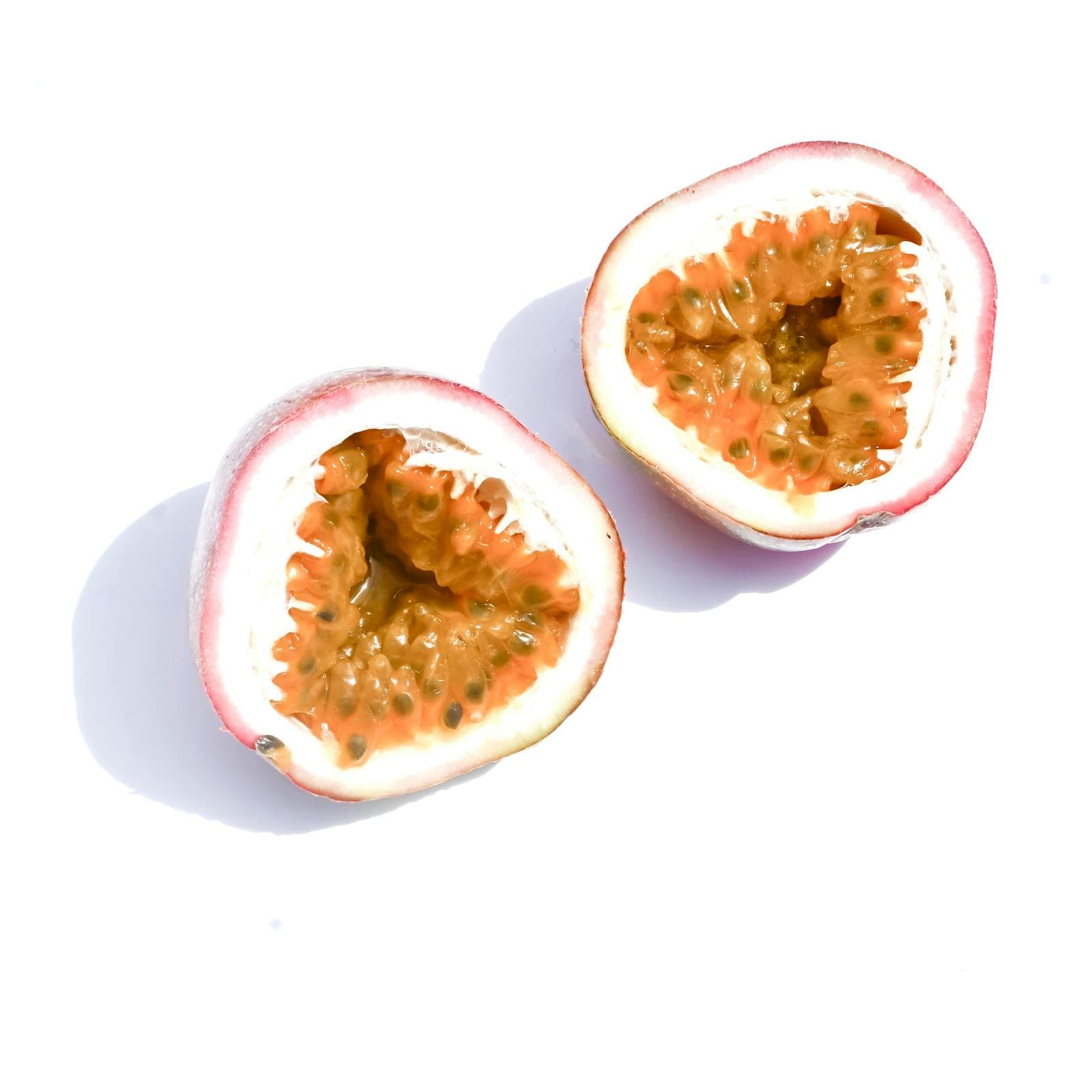
The Japanese cultivar runs larger, pulpier and markedly sweeter than the South American passion fruit most people know. Less tart, more dessert — Kagoshima growers select for a balance that reads as gift-grade rather than market-stall. Same intoxicating perfume, half the acidity.
 Premium
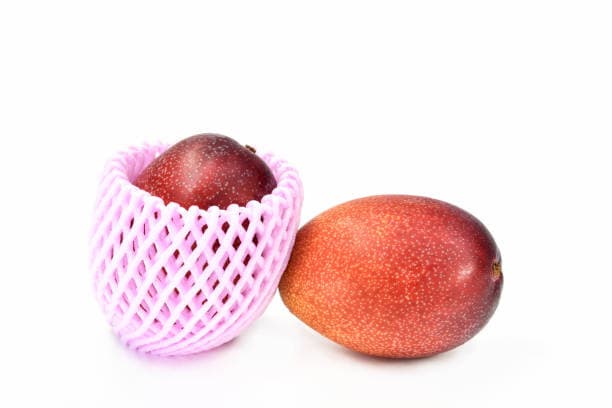
Grown to an exact weight, ripened on the branch, and shipped in a velvet-lined wooden box. The most precisely farmed mango on earth — Taiyo-no-Tamago, "Egg of the Sun" — and the closest thing the fruit world has to a luxury watch. Single fruits have sold at Japanese auction for record sums.
 Premium
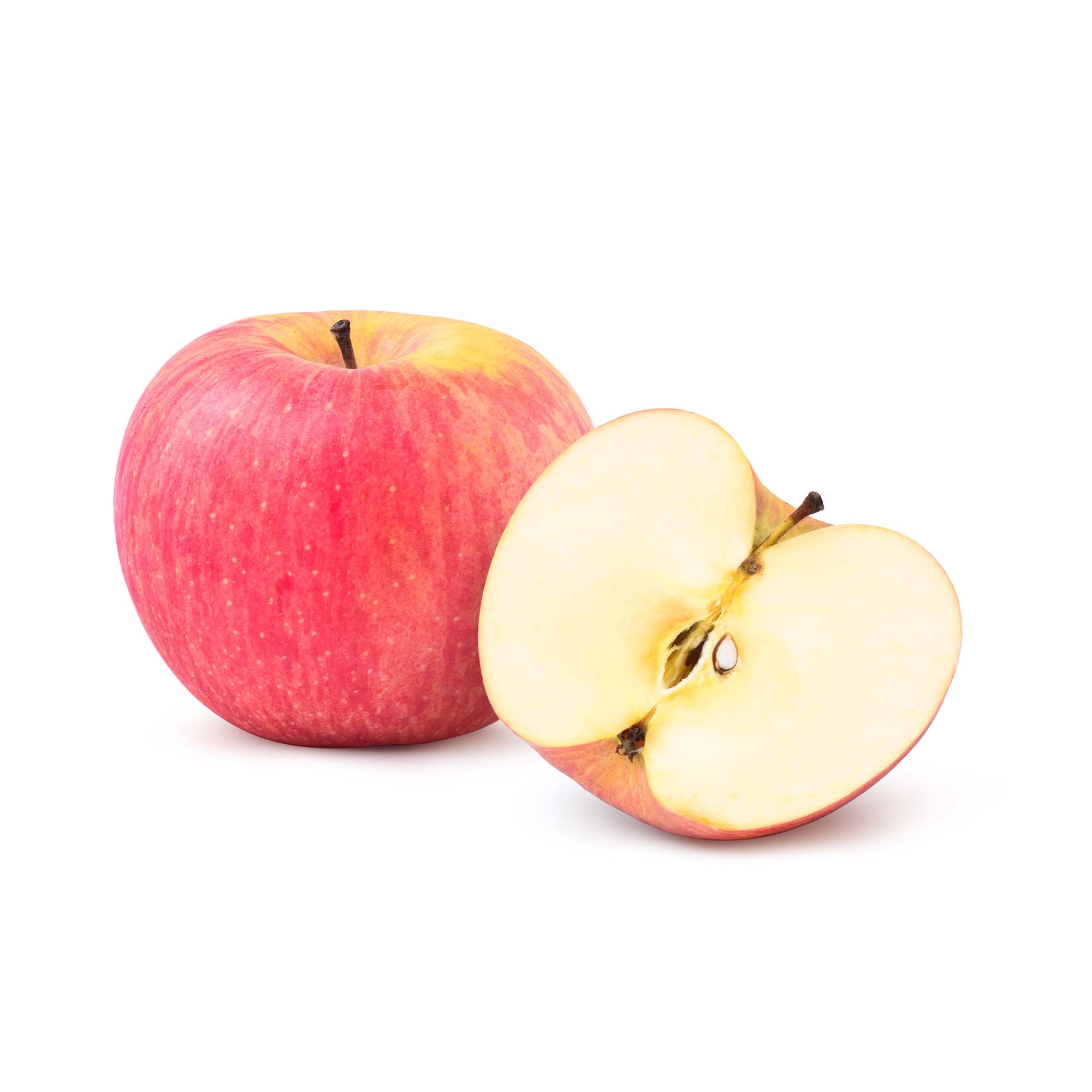
Snap-crisp, honey-sweet, and Japan's best-selling apple by a long way. Bred at Fujisaki in Aomori from a Red Delicious × Ralls Janet cross — low acidity, high sugar, and a texture that doesn't go floury for weeks. The platonic eating apple.
A hybrid of cherimoya and sugar-apple — knobbled green skin hides a snow-white pulp that scoops out like soft ice cream. Spoonable dessert before you've done anything to it. Yields like a ripe avocado when ready.
Russet-brown skin, salmon-orange flesh, single mahogany seed. Mamey tastes like sweet potato, pumpkin pie and marzipan all at once — dense, smooth and unmistakably Central American. Eat with a spoon, straight from the half.
A small Mexican mango bred for pure sweetness — fibre-free, butter-textured, honey-sweet. A candy bar masquerading as a fruit. The cultivar of choice for premium mango lassi and sticky-rice desserts.
The Costa Rican mini-pineapple. Sweeter, lower-acid, edible core. The most fragrant pineapple on the bench — drinks like vanilla syrup, no tongue-burn from bromelain.
The deep-magenta cultivar of prickly pear. Same desert fruit, bigger pigment, sweeter finish. Watermelon meets pomegranate with crunchy edible seeds and a flesh that stains everything it touches.
The yellow cultivar of prickly pear — milder, paler, less staining than the red. Watermelon meets honeydew with edible seeds. The gateway prickly pear if you're new to the family.
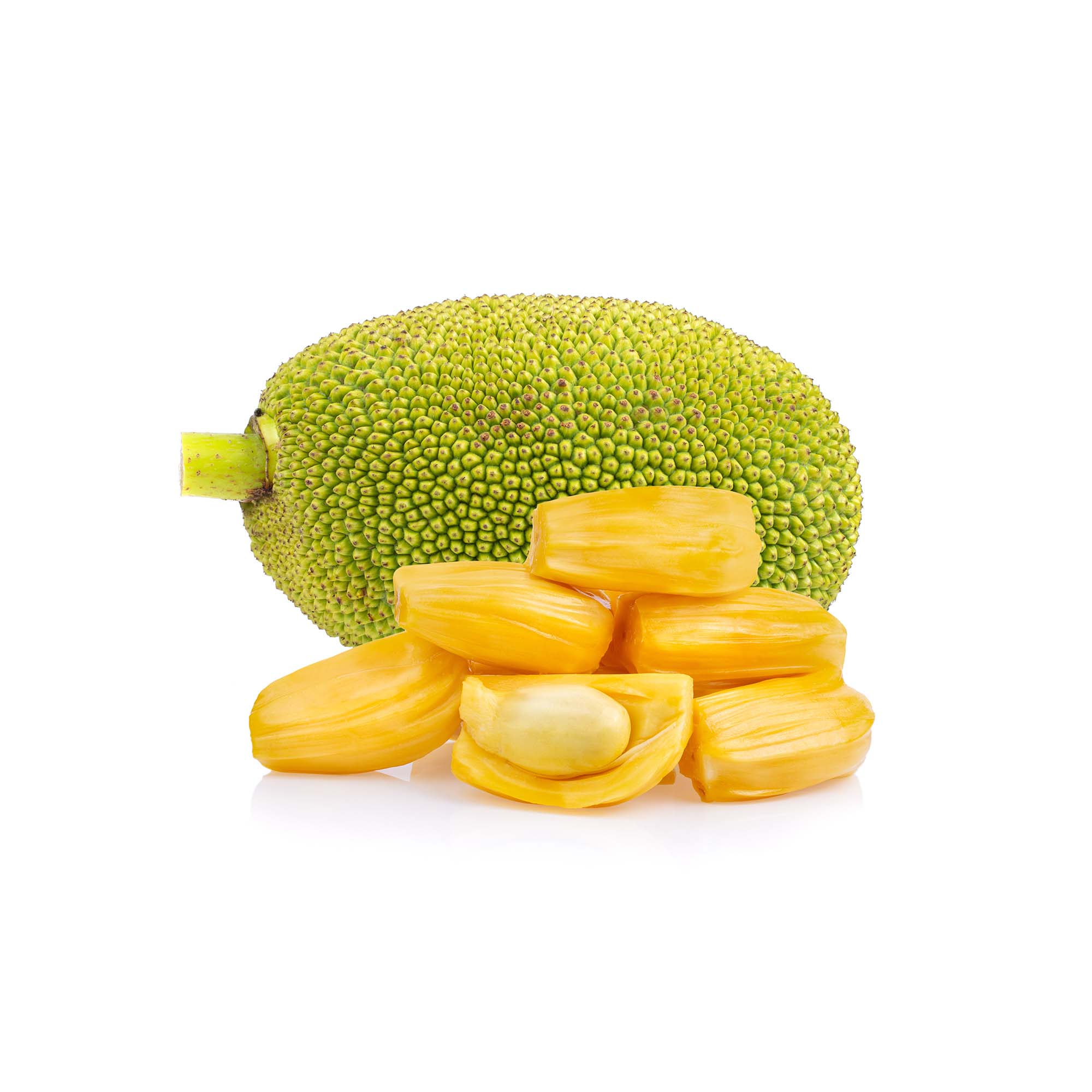
The largest tree fruit in the world — broken into golden pods of bubblegum-tropical sweetness. Eats chewy-firm, drinks like banana-mango-pineapple. The whole fruit can weigh 40kg; you'll buy it pre-portioned.
The rarer red-fleshed cultivar — reddish-orange pods instead of golden, smokier perfume, more complex than the standard yellow. A specialist's jackfruit.
Lychee's quieter cousin. Tan-brown shell, translucent grey-white flesh, single dark seed staring back like a dragon's eye. Less floral than lychee, more honey-musk, just as delicate.
Profiles that tend to show up alongside sweet.