


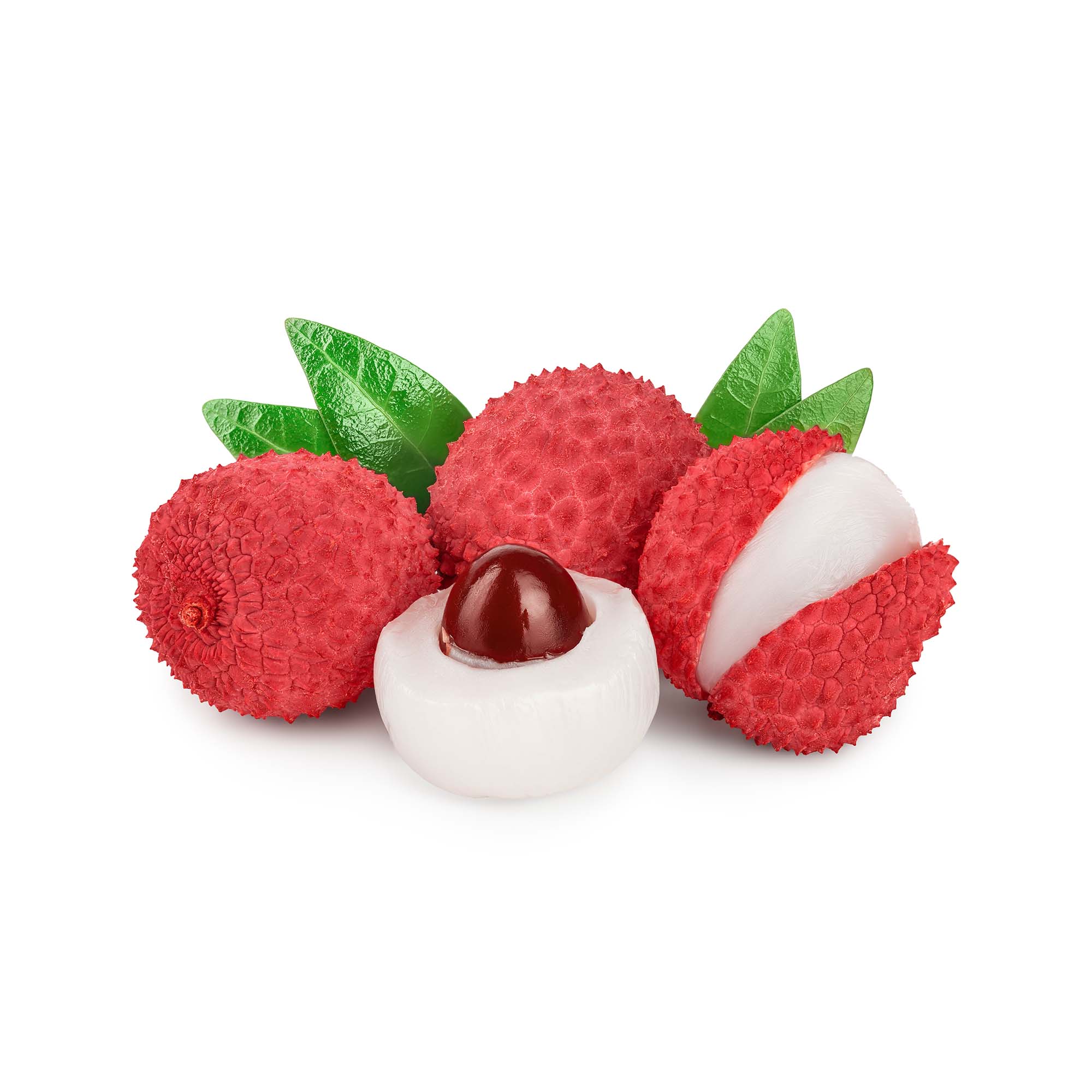
The rose-scented summer classic. A pink, knobbled shell cracks under a thumbnail to release translucent flesh around a polished mahogany seed. Sweet, floral, perfumed — the fresh fruit eats nothing like the tinned version most people grew up with. Eat cold, eat fast.
Ripening & storage
Non-climacteric — eat as-is- Ripeness cue
- Pink-red shell, snappy not papery; heavy for its size.
- Storage
- Refrigerate immediately; 5–7 days max.
About Lychee
Lychee (Litchi chinensis) is the fruit southern China has been growing for over two thousand years — a small, knobbled, pink-red drupe with translucent white flesh wrapped around a single shiny brown seed. Now widely grown across India, Madagascar, Vietnam and South Africa, but the Chinese cultivars are still the benchmark.
The flavour is unmistakable — sweet, deeply floral, with an unmistakable rose-perfume top note that's been described as everything from "liquid silk" to "the smell of a Chinese garden". Tinned lychee captures almost none of this, which is why fresh lychee in season feels like a different fruit.
Crack the shell at the seam, peel away, eat around the seed. Brilliant cold, with sparkling wine, in cocktails, or pressed into a granita. Buy what you'll eat in 3–4 days — the shell goes brown fast and the flesh follows.
Did you know?
- Cultivated in southern China since at least 1059 AD, with folk references reaching back as far as 2000 BC.
- Around 200 cultivars exist globally — notable names include Kwai Mai, Mauritius, Brewster and Hak Ip.
- Lychee seeds contain methylenecyclopropylglycine, a compound linked to encephalopathy outbreaks among undernourished children — the flesh itself is safe.
Sources: Wikipedia
How to eat
Below are the general steps that work across most kitchens. The description above is the source of truth for any cultivar-specific detail — cross-check before you cut.
1. Check ripeness
Use the cues in the description above. As a rule, exotic fruits do most of their ripening off the tree — give them a day or two at room temperature if they feel firmer than expected.
2. Wash and chill
Rinse under cold water, pat dry, and chill before serving. Cold flesh holds shape better when sliced and brings the aromatic notes forward.
3. Cut, scoop or peel
Follow the technique described above. If in doubt, halve crosswise with a sharp knife and taste a spoonful before committing to a full prep.
4. Pair simply
A squeeze of lime, a pinch of salt, or a drizzle of honey will lift almost any tropical fruit. Match strong cheese, cured meats or yoghurt for a board; keep flavours minimal when the fruit is the star.
From the Soapberry family (rambutan, lychee): Crack the rind at the seam with a thumbnail, squeeze the flesh out of the shell, eat around the seed.
Buy this fruit
Sourced ripe and graded by hand. UK next-day delivery on every order placed before the daily cutoff.