


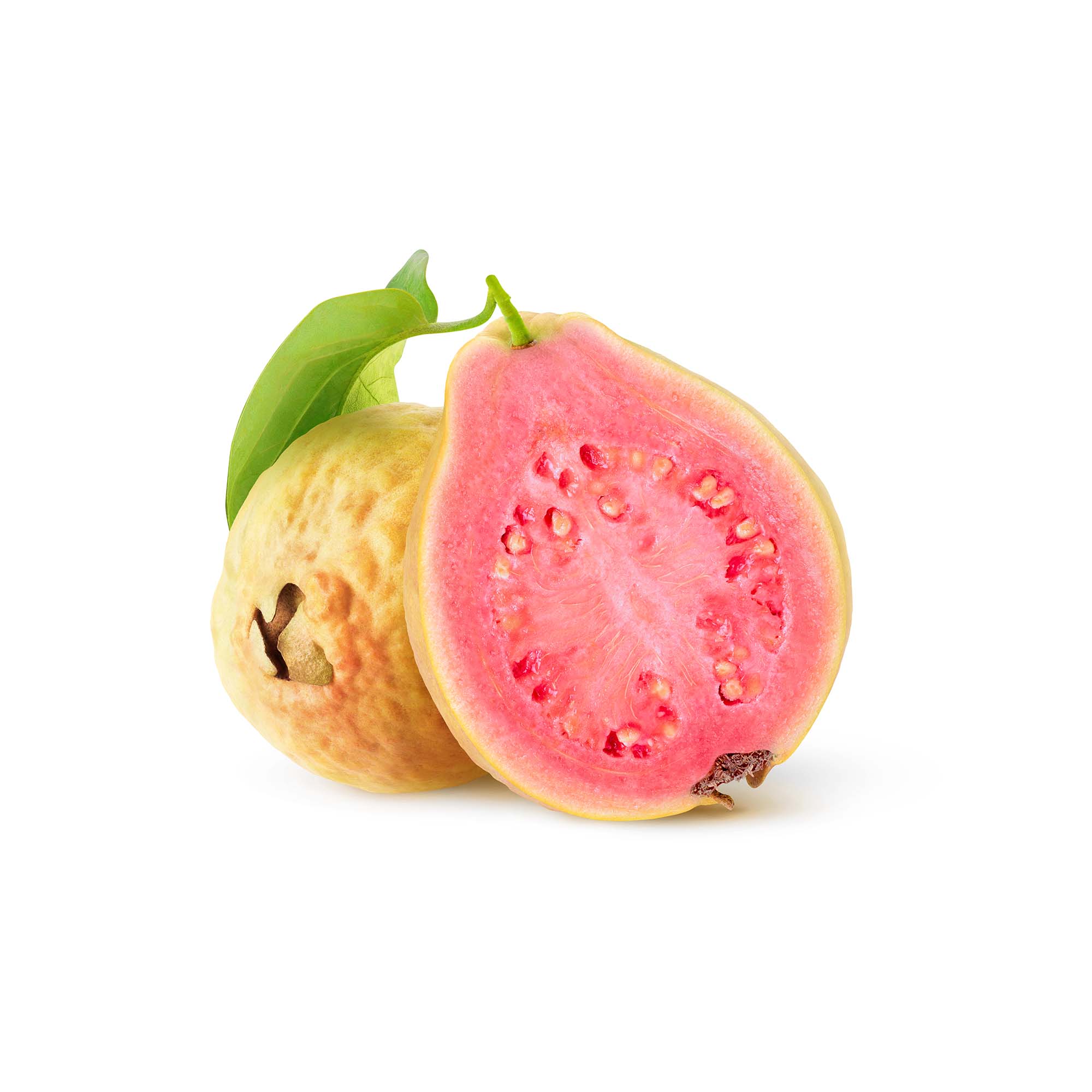
Pale green skin, hot-pink centre. The aroma walks into the room before the fruit does — tropical, floral, faintly musky. Eat skin and all, seeds and all; the seeds are crunchy and entirely edible. Vitamin-C density that puts oranges in the shade, and a flavour you can taste at three paces.
Ripening & storage
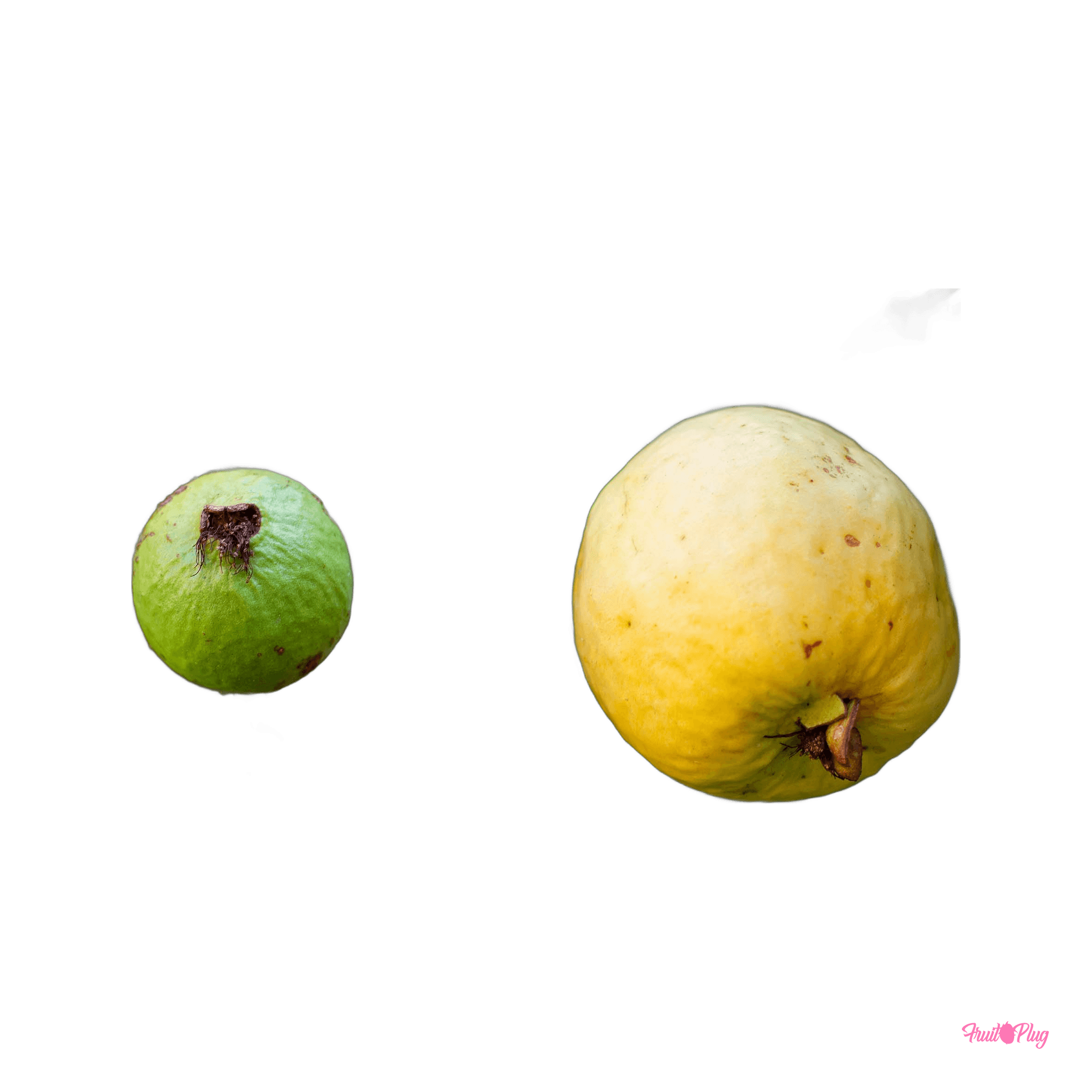
Climacteric — ripens off the tree- Ripeness cue
- Skin yellows from green; flesh perfumes the kitchen.
- Storage
- Room temp to ripen, fridge 3–4 days once soft.
About Pink guava
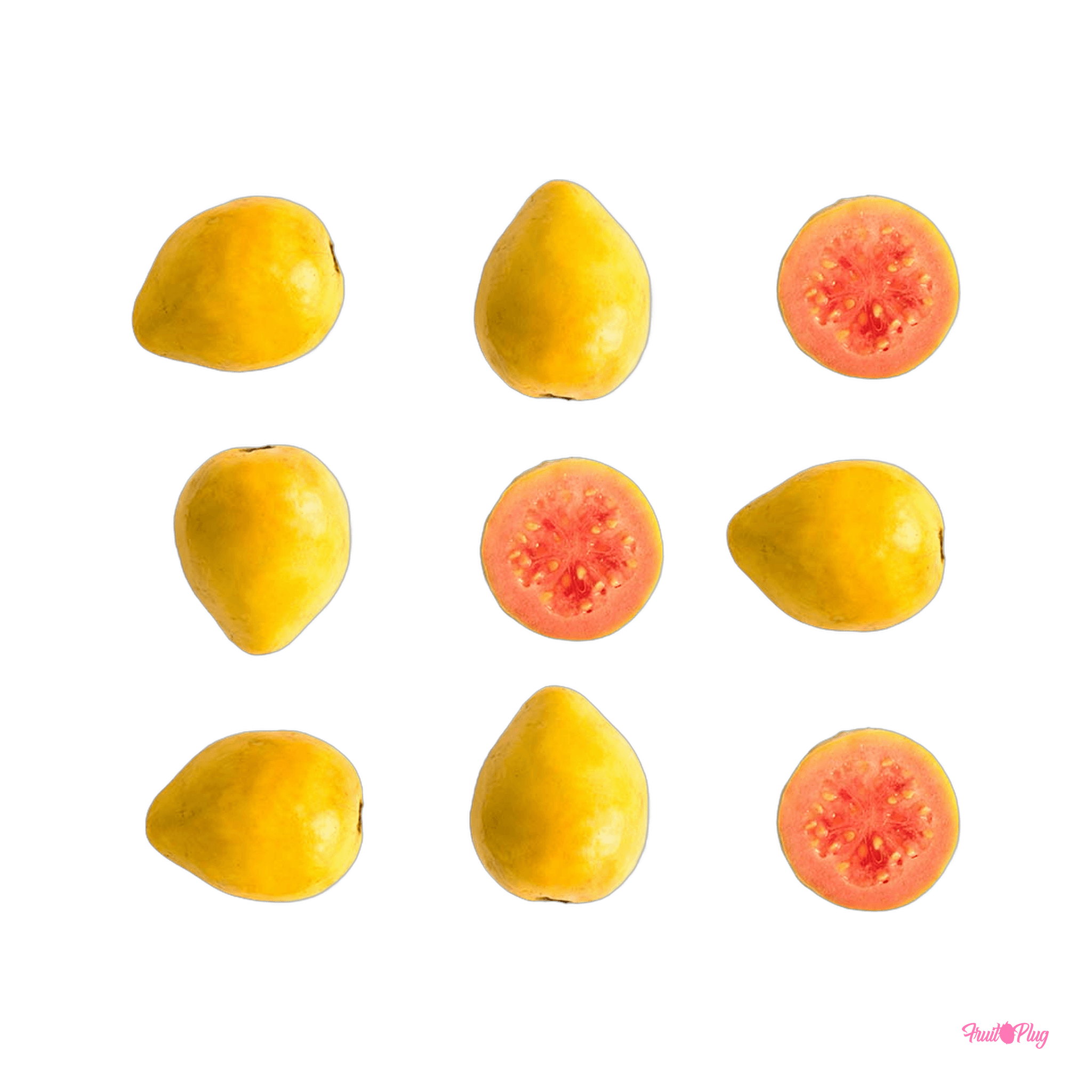
Pink guava (Psidium guajava) is the pink-fleshed cultivar of common guava, native to Central and South America and now grown across every tropical zone on earth. The skin is pale green to soft yellow when ripe; cut into one and the inside is a vivid raspberry-pink studded with hard, edible seeds.
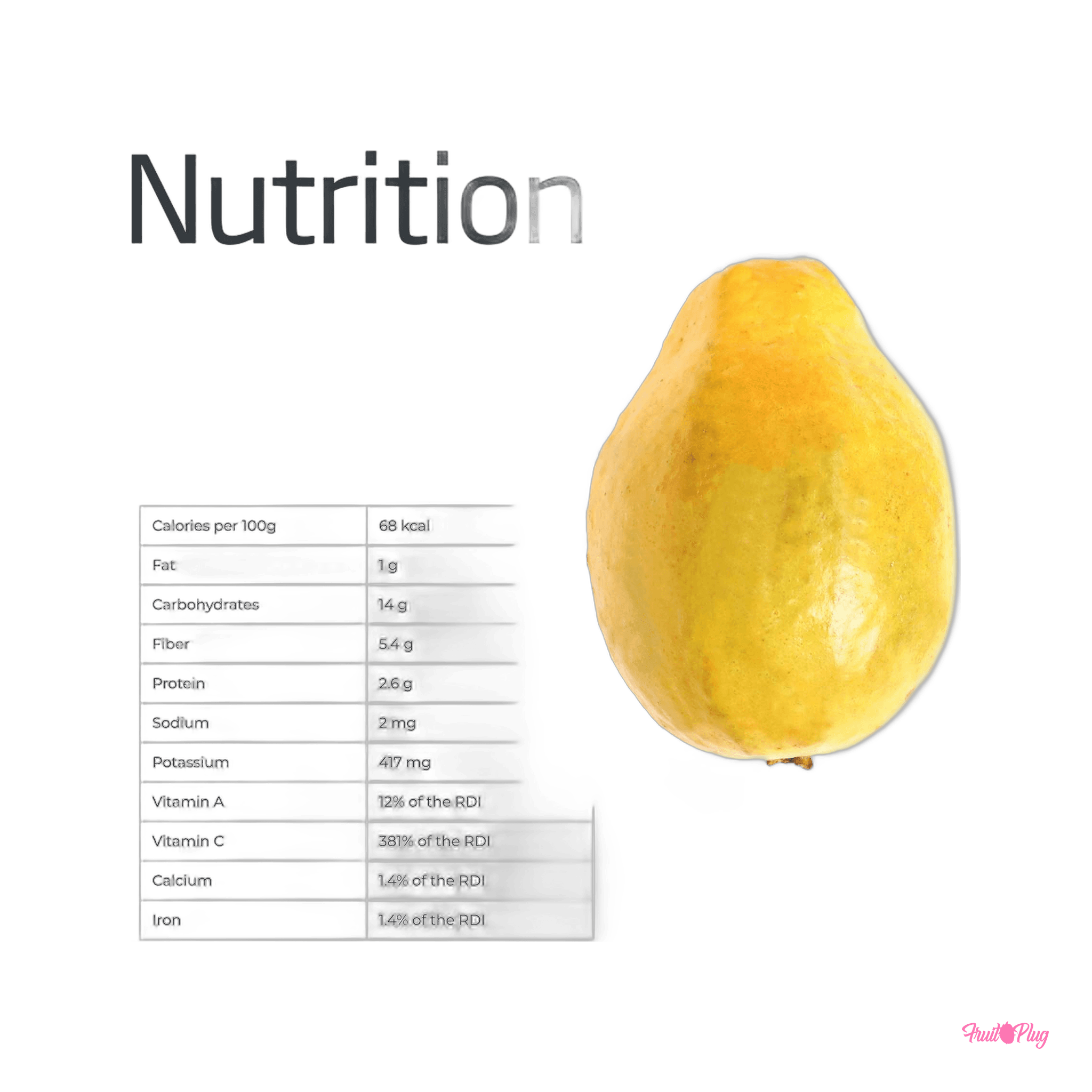
Flavour is tropical candy with a musky undertone — sweet, floral, perfumed, slightly funky in the way ripe tropical fruit can be. The aroma is genuinely room-filling. Vitamin-C content runs roughly four times that of an orange. The seeds are crunchy and edible — don't try to avoid them.
Wash and eat whole like an apple, or quarter and bite. Ripe guava gives slightly to pressure and smells strong. Brilliant blended with lime and a pinch of salt as a juice, or sliced over yogurt and granola for breakfast.
Did you know?
- Native to the Caribbean, Central America and the northern reaches of South America, now grown across every tropical continent.
- Varieties carry white, pink or red flesh, with a handful of cultivars showing red skin instead of the usual green or yellow.
- Guava seeds can sit dormant for months before suddenly accelerating into growth — trees often fruit within two to eight years.
Sources: Wikipedia
How to eat
Below are the general steps that work across most kitchens. The description above is the source of truth for any cultivar-specific detail — cross-check before you cut.
1. Check ripeness
Use the cues in the description above. As a rule, exotic fruits do most of their ripening off the tree — give them a day or two at room temperature if they feel firmer than expected.
2. Wash and chill
Rinse under cold water, pat dry, and chill before serving. Cold flesh holds shape better when sliced and brings the aromatic notes forward.
3. Cut, scoop or peel
Follow the technique described above. If in doubt, halve crosswise with a sharp knife and taste a spoonful before committing to a full prep.
4. Pair simply
A squeeze of lime, a pinch of salt, or a drizzle of honey will lift almost any tropical fruit. Match strong cheese, cured meats or yoghurt for a board; keep flavours minimal when the fruit is the star.
From the Myrtle family (guava, rose apple): No peeling — wash and bite straight in. Soft seeds are fine; hard ones sit in the core, eat around them.
Buy this fruit
Sourced ripe and graded by hand. UK next-day delivery on every order placed before the daily cutoff.