


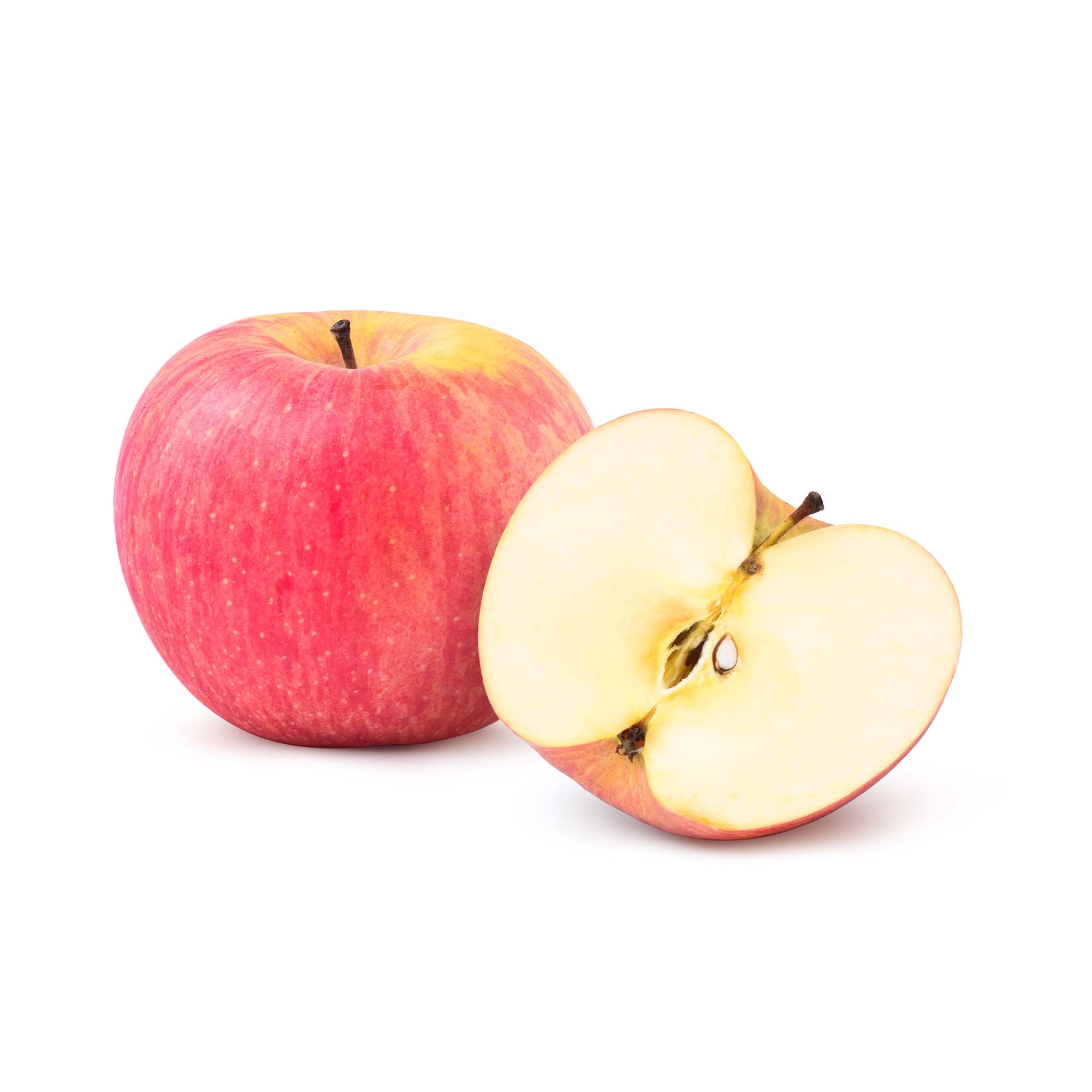
Snap-crisp, honey-sweet, and Japan's best-selling apple by a long way. Bred at Fujisaki in Aomori from a Red Delicious × Ralls Janet cross — low acidity, high sugar, and a texture that doesn't go floury for weeks. The platonic eating apple.
Ripening & storage
Climacteric — ripens off the tree- Ripeness cue
- Skin firm with a sweet aromatic note; heavy for its size.
- Storage
- Fridge for 4–6 weeks — keeps exceptionally well.
About Fuji Apple
The Fuji apple (Malus domestica 'Fuji') is a Japanese-bred apple developed at the Tohoku Research Station in Fujisaki, Aomori, in the late 1930s and named after the local town. The cross is a Red Delicious × Ralls Janet, and the result is the apple that has spent decades as the best-selling apple in Japan.
The profile is straightforward: low acidity, high sugar (typically 15–18 Brix on graded fruit), a snap-crisp texture that holds for weeks rather than days, and a clean honeyed sweetness with no green-apple bite. Skin is mottled red over green-yellow, and the flesh is dense, white, and noticeably firmer than European apples.
Eat cold, unpeeled — the skin is thin and edible. Slices brilliantly into salads without browning quickly. Pairs with strong cheese, with a thin slice of cured ham, or simply eaten out of hand as a perfect single-fruit snack. Stores in the fridge for up to a month.
Did you know?
- Bred in 1939 at a Ministry of Agriculture research station in Fujisaki, Aomori, Japan.
- A cross between two American apples — Red Delicious and Ralls Janet — giving Fuji its firm flesh and high sugar.
- Fuji keeps its texture under refrigeration for up to a year — far longer than any other mass-market apple cultivar.
Sources: Wikipedia
How to eat
Below are the general steps that work across most kitchens. The description above is the source of truth for any cultivar-specific detail — cross-check before you cut.
1. Check ripeness
Use the cues in the description above. As a rule, exotic fruits do most of their ripening off the tree — give them a day or two at room temperature if they feel firmer than expected.
2. Wash and chill
Rinse under cold water, pat dry, and chill before serving. Cold flesh holds shape better when sliced and brings the aromatic notes forward.
3. Cut, scoop or peel
Follow the technique described above. If in doubt, halve crosswise with a sharp knife and taste a spoonful before committing to a full prep.
4. Pair simply
A squeeze of lime, a pinch of salt, or a drizzle of honey will lift almost any tropical fruit. Match strong cheese, cured meats or yoghurt for a board; keep flavours minimal when the fruit is the star.
From the Rose family (nashi pear, strawberry, apple): Eat cold and unpeeled where you can. Pairs naturally with blue cheese, prosciutto or a clean drizzle of honey.
Buy this fruit
Sourced ripe and graded by hand. UK next-day delivery on every order placed before the daily cutoff.