


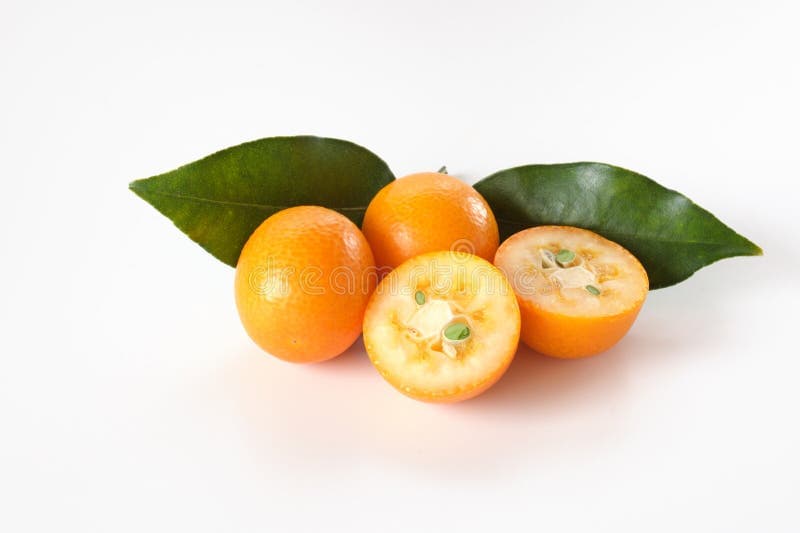
Bigger and meaningfully sweeter than the supermarket kumquat — Japanese growers select for thin, candy-sweet peel and reduced acid in the flesh. Eat whole in one bite. The premium tier of a fruit that was already designed to be eaten skin and all.
Ripening & storage
Non-climacteric — eat as-is- Ripeness cue
- Skin glossy and deep orange; sweet smell when scratched.
- Storage
- Fridge for 2–3 weeks.
About Japanese Kumquat (Kinkan)
The Kinkan is the Japanese premium-grade kumquat, selected from Citrus japonica cultivars for thin candy-sweet peel and low-acid flesh. Compared to the standard kumquats grown in southern China and the Mediterranean, Kinkan are noticeably larger, sweeter, and less astringent.
The formula of the kumquat is unchanged — sweet skin, tart flesh, eaten whole — but the dial has been turned. The peel is closer to a crystallised orange than a regular kumquat rind, and the inner pulp carries less of the sharp acid bite. The aroma is also more pronounced; one Kinkan in your hand will perfume the air around you.
Wash gently, pinch each fruit between thumb and finger to mingle the peel oil with the pulp, and bite whole. Brilliant in salads, sliced and candied as a garnish, or eaten as a single-bite end-of-meal palate cleanser. Stores in the fridge for up to two weeks.
Did you know?
- Native to southern China, cultivated in Japan as Kinkan for at least several centuries — the Japanese name means 'golden orange'.
- Japanese growers favour the round sweet Meiwa cultivar over the sharper-flavoured oval Nagami common in Mediterranean groves.
- Kumquats invert the usual citrus — the skin is sweeter than the flesh, which is why they're eaten whole in one bite.
Sources: Wikipedia
How to eat
Below are the general steps that work across most kitchens. The description above is the source of truth for any cultivar-specific detail — cross-check before you cut.
1. Check ripeness
Use the cues in the description above. As a rule, exotic fruits do most of their ripening off the tree — give them a day or two at room temperature if they feel firmer than expected.
2. Wash and chill
Rinse under cold water, pat dry, and chill before serving. Cold flesh holds shape better when sliced and brings the aromatic notes forward.
3. Cut, scoop or peel
Follow the technique described above. If in doubt, halve crosswise with a sharp knife and taste a spoonful before committing to a full prep.
4. Pair simply
A squeeze of lime, a pinch of salt, or a drizzle of honey will lift almost any tropical fruit. Match strong cheese, cured meats or yoghurt for a board; keep flavours minimal when the fruit is the star.
From the Citrus family (kumquat, sumo): Squeeze a kumquat between finger and thumb before biting — it mingles peel oil and pulp on the first crunch.
Buy this fruit
Sourced ripe and graded by hand. UK next-day delivery on every order placed before the daily cutoff.