


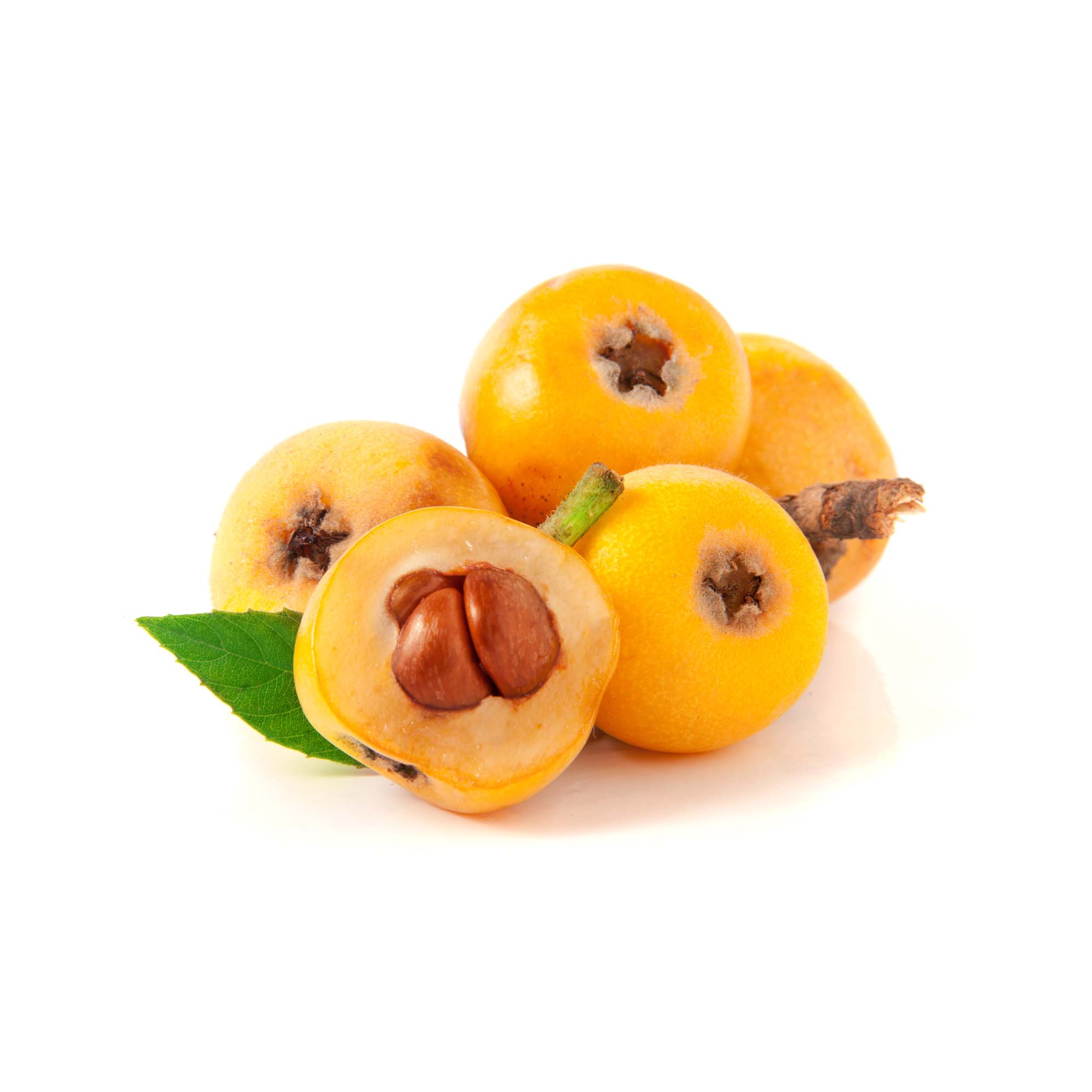
Apricot-gold fruit that only appears for a few weeks in late spring. Tastes somewhere between peach, mango and pear, with a clean floral edge and a juice content that overwhelms the small fruit it's hidden inside. Bruises if you look at it the wrong way — selected from gift-grade growers.
Ripening & storage
Non-climacteric — eat as-is- Ripeness cue
- Skin yellow-orange with a slight blush; gives gently to thumb.
- Storage
- Fridge immediately; eat within 3–5 days — they don't keep.
About Loquat
Loquat (Eriobotrya japonica) — known in Japan as biwa — is a small apricot-gold fruit native to southern China and cultivated as a gift-grade premium fruit across Japan. It fruits in late spring, with a window of just four to six weeks before the season ends.
The flavour reads as a cross between peach, mango and pear, with a clean floral edge and a soft acidity that keeps it from becoming cloying. Inside each fruit are 2–4 large brown seeds (not eaten); around them sits a juicy, slightly fibrous flesh that bruises so easily that supermarket-grade loquat is essentially unobtainable in the UK. We source from Japanese gift-grade growers.
Eat at room temperature, ideally within 48 hours of arrival. Wash gently, halve, pop the seeds out, eat the flesh. Pair with chilled cream, with a slice of brioche, or eaten as a stand-alone seasonal fruit course.
Did you know?
- Native to the cooler hill country of south-central China; carried early into Japan and now grown across subtropical regions worldwide.
- Notable cultivars include 'Gold Nugget', the self-fertile 'Mogi', the late-ripening Portuguese 'Tanaka' and the large, sweet 'Peluche'.
- Loquat flowers open in autumn or early winter — the tree bucks convention by ripening its fruit at the top of spring.
Sources: Wikipedia
How to eat
Below are the general steps that work across most kitchens. The description above is the source of truth for any cultivar-specific detail — cross-check before you cut.
1. Check ripeness
Use the cues in the description above. As a rule, exotic fruits do most of their ripening off the tree — give them a day or two at room temperature if they feel firmer than expected.
2. Wash and chill
Rinse under cold water, pat dry, and chill before serving. Cold flesh holds shape better when sliced and brings the aromatic notes forward.
3. Cut, scoop or peel
Follow the technique described above. If in doubt, halve crosswise with a sharp knife and taste a spoonful before committing to a full prep.
4. Pair simply
A squeeze of lime, a pinch of salt, or a drizzle of honey will lift almost any tropical fruit. Match strong cheese, cured meats or yoghurt for a board; keep flavours minimal when the fruit is the star.
From the Rose family (nashi pear, strawberry, apple): Eat cold and unpeeled where you can. Pairs naturally with blue cheese, prosciutto or a clean drizzle of honey.
Buy this fruit
Sourced ripe and graded by hand. UK next-day delivery on every order placed before the daily cutoff.