


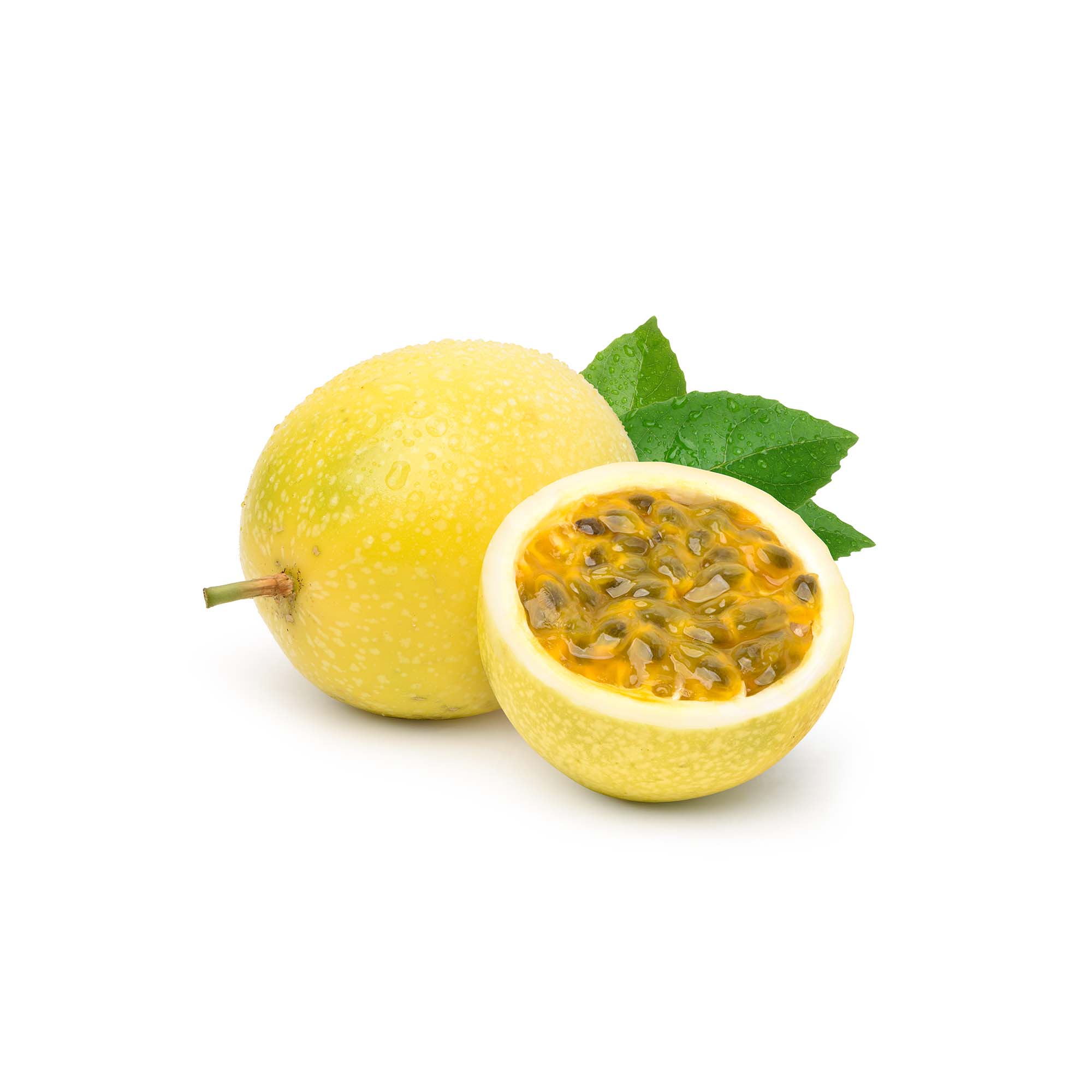
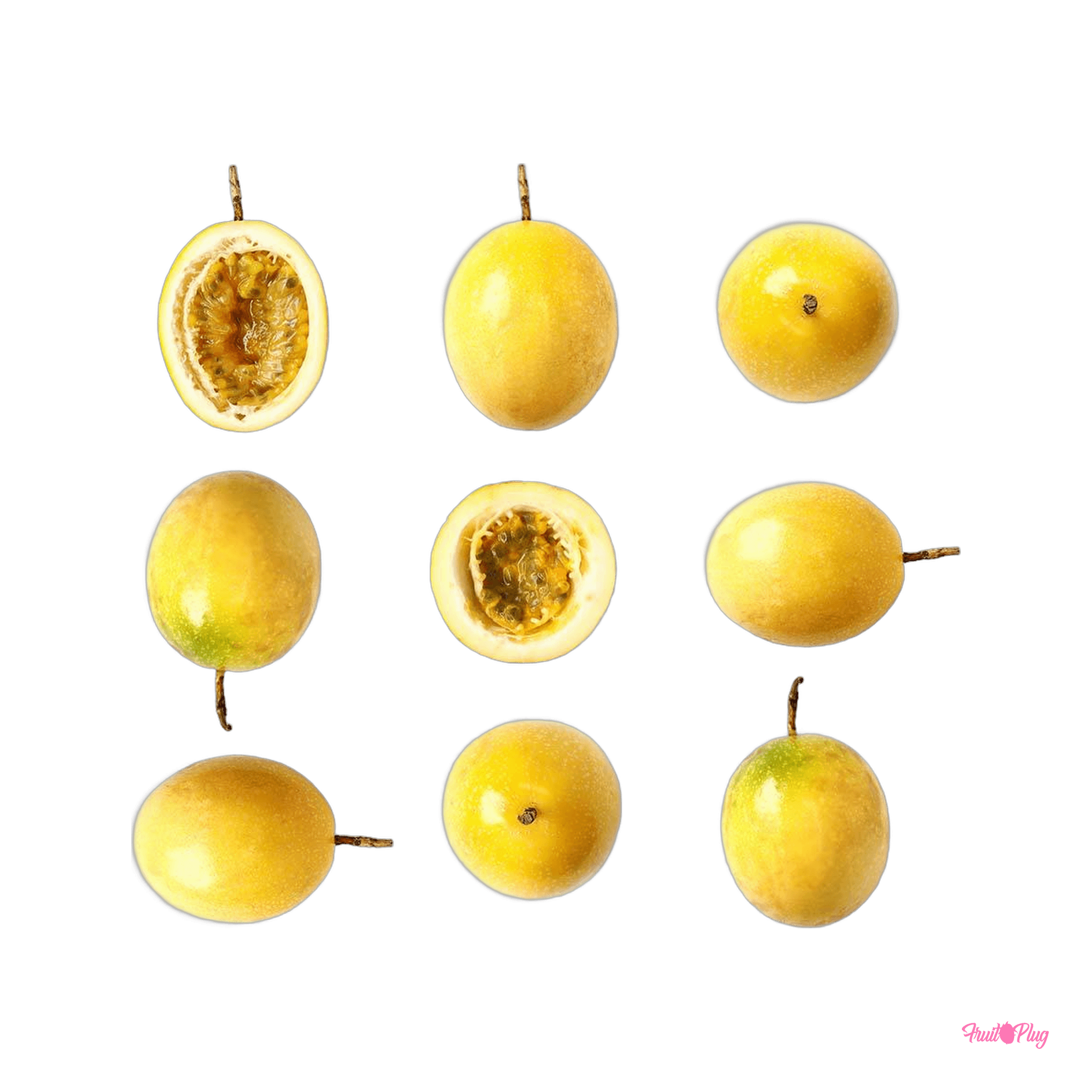
The yellow cousin of purple passion fruit — bigger, juicier, sharper. A single fruit yields enough pulp for two cocktails or a full mousse. Tartness sits closer to lime than perfume, which is why Latin American kitchens reach for maracuya when passion fruit alone would feel too floral.
Ripening & storage
Climacteric — ripens off the tree- Ripeness cue
- Yellow skin gives slightly to pressure; light wrinkling is good.
- Storage
- 2–3 days at room temp, then 5 days fridge.
About Maracuya
Maracuya (Passiflora edulis f. flavicarpa) is the bright-yellow form of passion fruit — the same species, a different cultivar, grown across South America and the wider tropics. The skin is thicker and smoother than the purple type and the fruit itself is noticeably larger.
Flavour-wise, maracuya leans tart and citrus where purple passion fruit leans floral and perfumed. It is the workhorse of the family: cocktail bars use it for caipirinha riffs, pastry kitchens use it for mousse, marinades and curd. The juice yield per fruit is significantly higher than purple passion fruit, which is why most commercial passion-fruit purée is actually maracuya.
Halve and scoop, or press through a sieve if you only want the juice. Pairs naturally with rum, condensed milk, dark chocolate and any oily fish that needs a sharp finish.
Did you know?
- The yellow form (f. flavicarpa) is grown throughout tropical South America and is the workhorse cultivar for commercial juice production.
- Used as rootstock in Australia for purple passion-fruit grafts because of its vigorous, disease-resistant root system.
- Most shop-bought passion-fruit purée is in fact maracuya — its juice yield per fruit is significantly higher than the purple form.
Sources: Wikipedia
How to eat
Below are the general steps that work across most kitchens. The description above is the source of truth for any cultivar-specific detail — cross-check before you cut.
1. Check ripeness
Use the cues in the description above. As a rule, exotic fruits do most of their ripening off the tree — give them a day or two at room temperature if they feel firmer than expected.
2. Wash and chill
Rinse under cold water, pat dry, and chill before serving. Cold flesh holds shape better when sliced and brings the aromatic notes forward.
3. Cut, scoop or peel
Follow the technique described above. If in doubt, halve crosswise with a sharp knife and taste a spoonful before committing to a full prep.
4. Pair simply
A squeeze of lime, a pinch of salt, or a drizzle of honey will lift almost any tropical fruit. Match strong cheese, cured meats or yoghurt for a board; keep flavours minimal when the fruit is the star.
From the Passion fruit family: Eat with a spoon straight from the shell, or press through a sieve when you only want the juice.
Buy this fruit
Sourced ripe and graded by hand. UK next-day delivery on every order placed before the daily cutoff.