


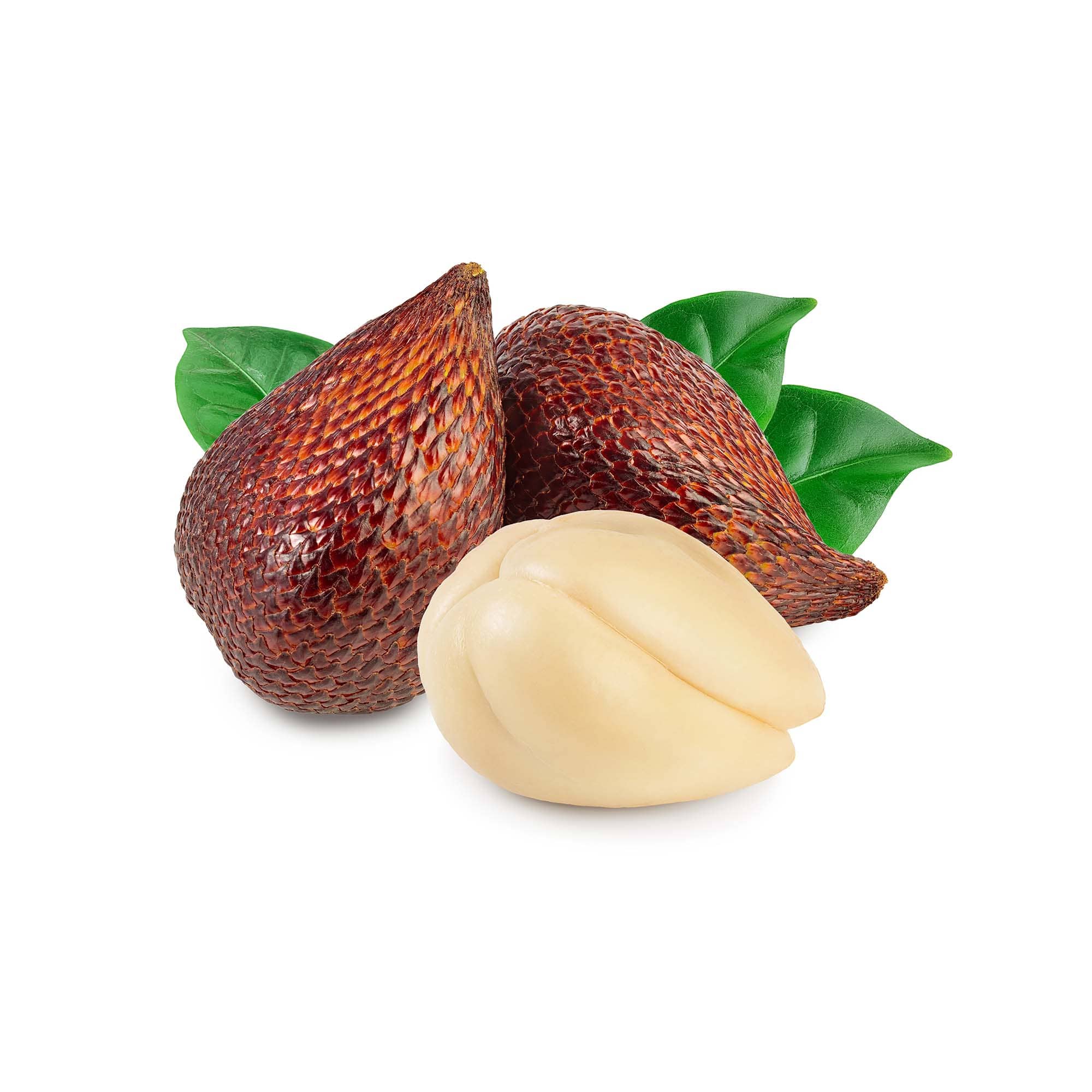
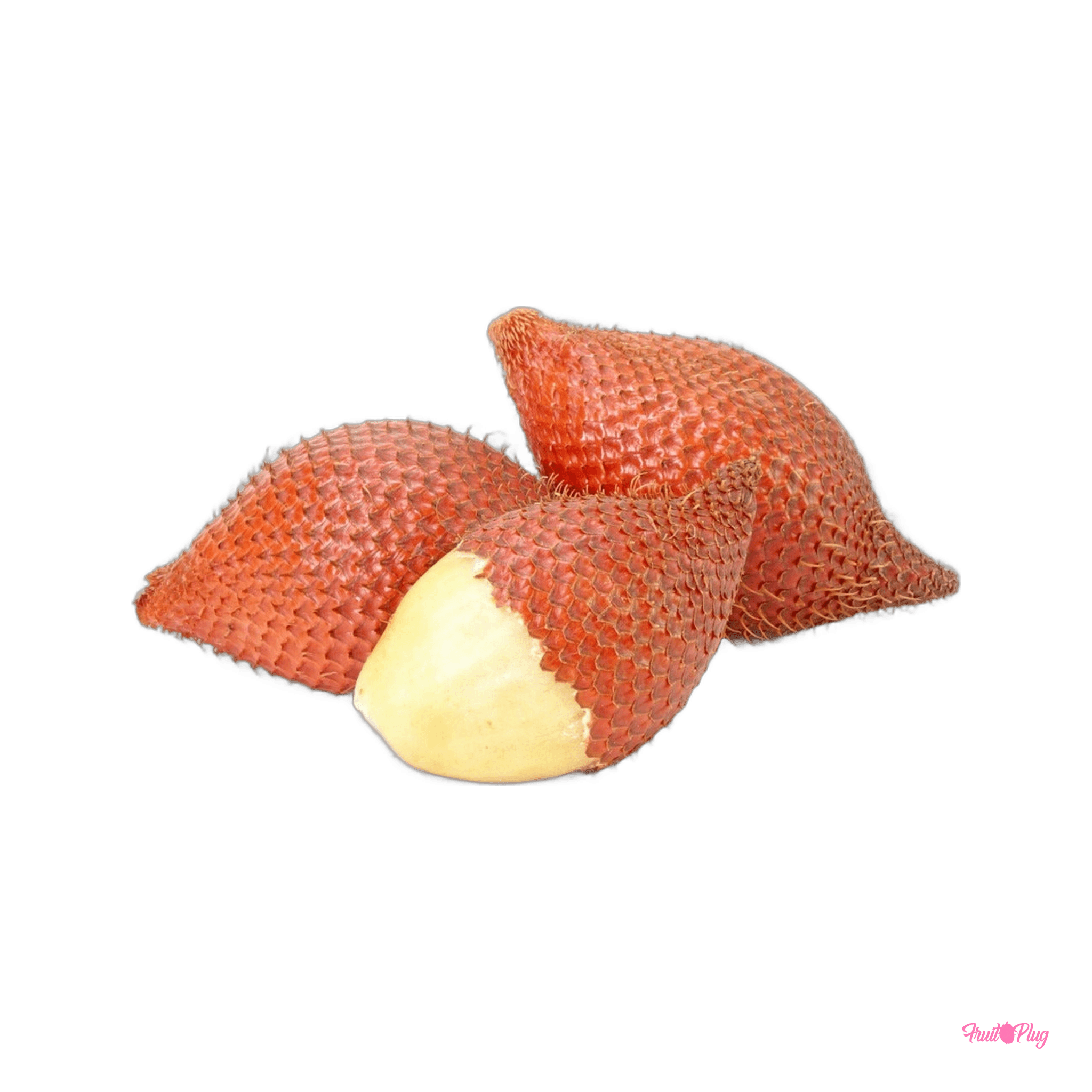
Skin like reptile scale, flesh inside that crunches like apple. The flavour is unlike anything else — pineapple, molasses, a faint vanilla, with a clean tartness running underneath. Confronting on first sight, addictive on second bite. The Indonesian palm fruit you'll either love or pass to your braver friend.
Ripening & storage
Climacteric — ripens off the tree- Ripeness cue
- Scales loosen at the pointed tip; flesh firm but yielding.
- Storage
- Cool dry spot — keeps 1–2 weeks unpeeled.
About Snake fruit (salak)
Snake fruit, or salak (Salacca zalacca), grows on a low palm native to Indonesia and Malaysia. Each fruit is a small pear-shaped pod wrapped in a brown, tessellated, scaled skin that genuinely looks like the side of a python. The skin is a defence mechanism, not a flavour clue.
Inside are two or three creamy-yellow segments around inedible seeds. The texture is unique in the fruit world — apple-crisp, almost dry, no juice — and the flavour is even stranger: pineapple, brown sugar and a faint vanilla, with a clean acidity that keeps it from cloying. Bali grows the famously sweetest variety (salak Bali); Java grows a tarter, more astringent cultivar.
Pinch the pointed tip until the scales split, then peel away in pieces like a hard-boiled egg. Eat the segments, discard the seeds. Brilliant on its own, or sliced into a Southeast Asian fruit rojak with chilli, lime and palm sugar.
Did you know?
- A palm species native to Java and Sumatra in Indonesia, now cultivated across the Indonesian archipelago.
- 'Salak pondoh' from Yogyakarta is the prized sweet cultivar; 'salak Bali' is the only monoecious Salacca variety.
- The sweetest variety ferments naturally into a wine that reaches around 13.5% alcohol — the scaly skin gives the fruit its snake-like nickname.
Sources: Wikipedia
How to eat
Below are the general steps that work across most kitchens. The description above is the source of truth for any cultivar-specific detail — cross-check before you cut.
1. Check ripeness
Use the cues in the description above. As a rule, exotic fruits do most of their ripening off the tree — give them a day or two at room temperature if they feel firmer than expected.
2. Wash and chill
Rinse under cold water, pat dry, and chill before serving. Cold flesh holds shape better when sliced and brings the aromatic notes forward.
3. Cut, scoop or peel
Follow the technique described above. If in doubt, halve crosswise with a sharp knife and taste a spoonful before committing to a full prep.
4. Pair simply
A squeeze of lime, a pinch of salt, or a drizzle of honey will lift almost any tropical fruit. Match strong cheese, cured meats or yoghurt for a board; keep flavours minimal when the fruit is the star.
From the Palm family (snake fruit): Pinch the pointed tip until the scales crack, then peel away like a hard-boiled egg.
Buy this fruit
Sourced ripe and graded by hand. UK next-day delivery on every order placed before the daily cutoff.