


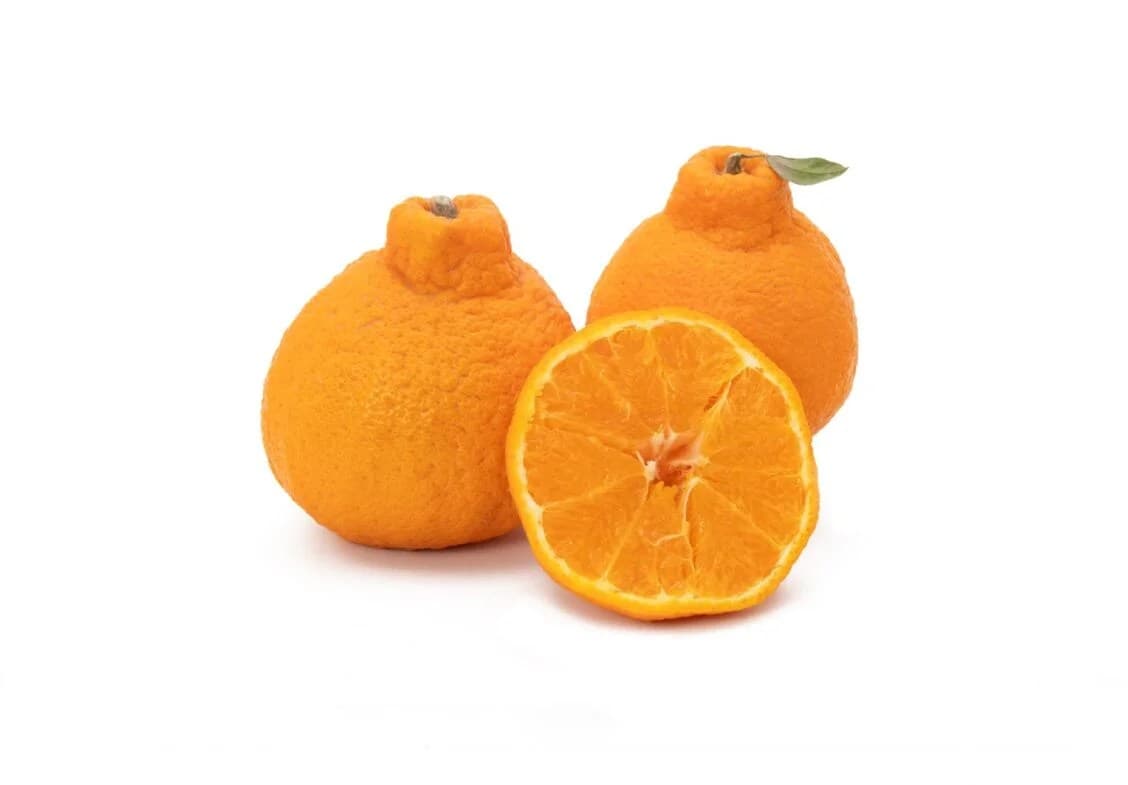
A seedless, bump-topped Japanese mandarin originally bred in Kumamoto and selected for maximum sweetness. The skin lifts off in one pull; the flesh inside reads as the richest orange you've ever had — concentrated sugar, low acid, and the cleanest citrus aroma in the family.
Ripening & storage
Non-climacteric — eat as-is- Ripeness cue
- Thick bumpy skin, deep orange; heavy in the hand.
- Storage
- Room temp 5–7 days; fridge for 2–3 weeks.
About Sumo Citrus
The Sumo Citrus is the export name for the Dekopon (officially Shiranuhi) — a Kumamoto-bred Japanese mandarin originally developed in 1972 from a Kiyomi × ponkan cross. The fruit is unmistakable: a comically large mandarin with a distinctive bump on the top, a thick easy-peel skin and almost no seeds.
Flavour is what justifies the price. The sugar content is dialled to over 13 Brix on the best fruit, the acidity is markedly lower than any Western mandarin, and the aroma is concentrated, clean and floral. The flesh segments separate cleanly with no pith stuck to them. Each fruit is hand-selected, individually wrapped and shipped slowly to develop full sweetness before sale.
Peel by hand starting at the bump — the skin lifts off in a single piece. Eat the segments straight; they're seedless. Served whole as a single piece of fruit, ideally chilled. Best eaten within a week of arrival.
Did you know?
- Developed in 1972 in Kumamoto, Japan as a cross between Kiyomi tangor and a ponkan mandarin.
- Formally the Shiranui cultivar; sold as Dekopon in Japan, Hallabong in South Korea, Kinsei in Brazil and Sumo Citrus in the United States.
- The fruit's distinctive top-knot bump initially blocked it from official variety registration — judges considered the shape cosmetically imperfect.
Sources: Wikipedia
How to eat
Below are the general steps that work across most kitchens. The description above is the source of truth for any cultivar-specific detail — cross-check before you cut.
1. Check ripeness
Use the cues in the description above. As a rule, exotic fruits do most of their ripening off the tree — give them a day or two at room temperature if they feel firmer than expected.
2. Wash and chill
Rinse under cold water, pat dry, and chill before serving. Cold flesh holds shape better when sliced and brings the aromatic notes forward.
3. Cut, scoop or peel
Follow the technique described above. If in doubt, halve crosswise with a sharp knife and taste a spoonful before committing to a full prep.
4. Pair simply
A squeeze of lime, a pinch of salt, or a drizzle of honey will lift almost any tropical fruit. Match strong cheese, cured meats or yoghurt for a board; keep flavours minimal when the fruit is the star.
From the Citrus family (kumquat, sumo): Squeeze a kumquat between finger and thumb before biting — it mingles peel oil and pulp on the first crunch.
Buy this fruit
Sourced ripe and graded by hand. UK next-day delivery on every order placed before the daily cutoff.