


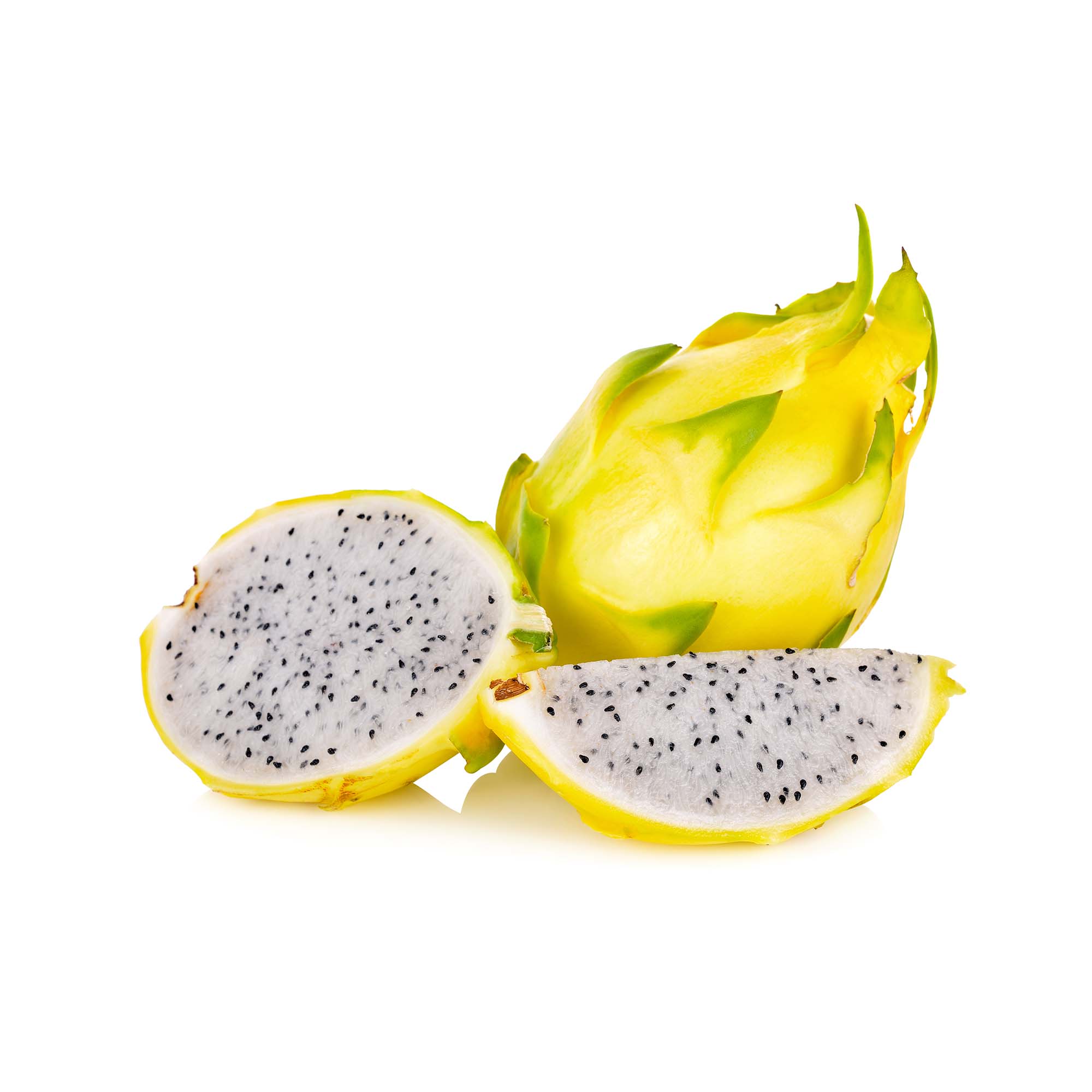
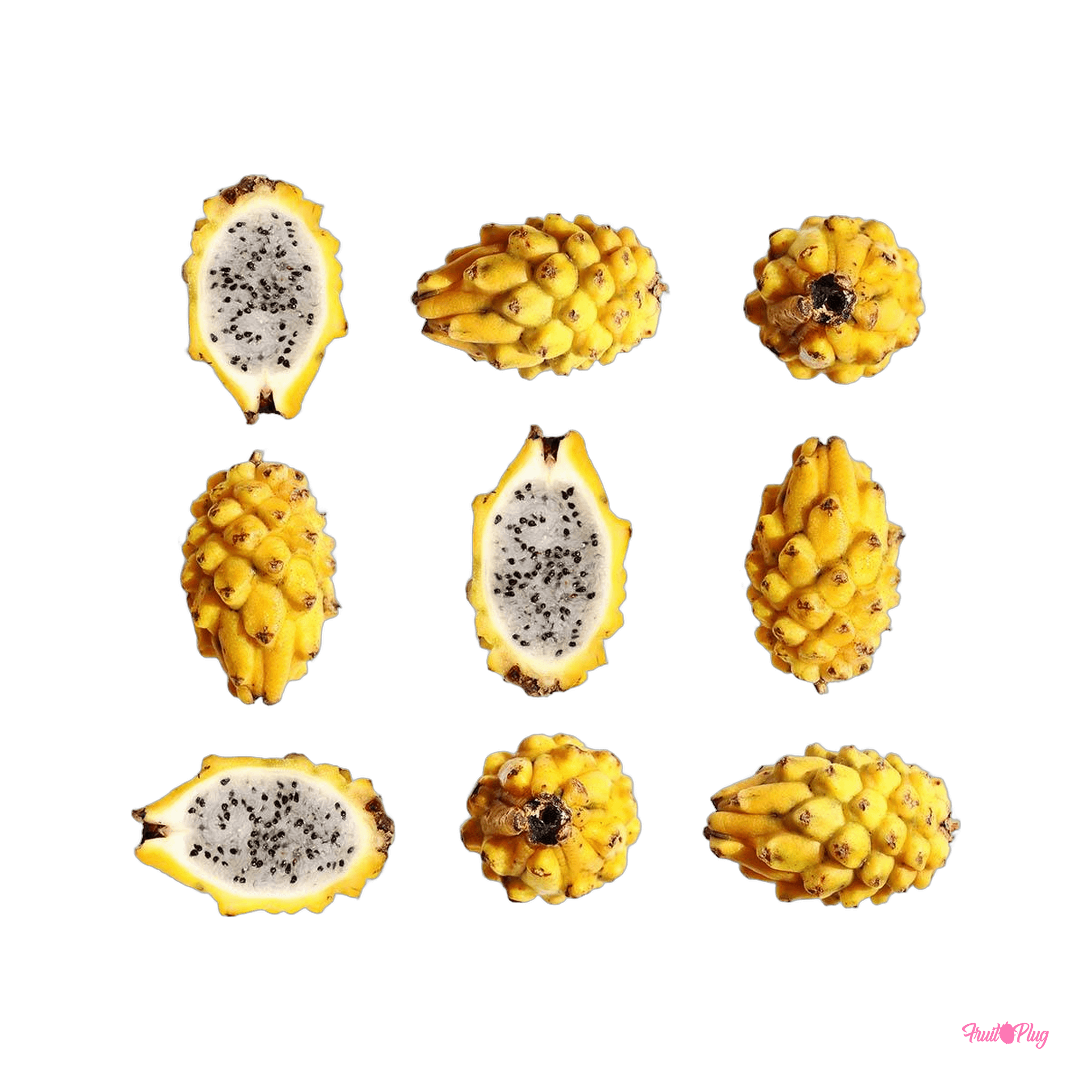


The most sugar-forward of the dragon-fruit clan. Knobbled yellow skin opens to white flesh studded with black seeds — denser than the red, sweeter than the white, with a clean honey-pear finish. The one to reach for when you want pitaya without the vegetal note.
Ripening & storage
Non-climacteric — eat as-is- Ripeness cue
- Bright yellow with no green tinge; yields very slightly when pressed.
- Storage
- Chill 24h before cutting; fridge for 5–7 days.
About Yellow Dragon (Pitahaya)
Yellow dragon fruit (Selenicereus megalanthus) is grown mainly in Colombia and Ecuador, where the dry highland conditions push the sugar content well past anything the red or white varieties can reach. The skin is bright yellow, knobbled, with stubby spines that growers brush off before packing.
Inside, the flesh is white and translucent, peppered with the same crunchy black seeds as its cousins. The flavour is the sweetest in the family — honey, pear, a clean tropical finish — with very little of the vegetal note that white pitaya can carry. Many people who've tried supermarket dragon fruit and been underwhelmed are surprised by this one.
Chill, halve, spoon. Brilliant with lime, with a dash of yogurt, or cubed onto an açaí bowl. Skin is not eaten and the spines should be removed if any remain.
Did you know?
- Native to Colombia, Ecuador, Venezuela, Peru and Panama, thriving in high-altitude tropical riparian forest.
- Distinguishable from Selenicereus undatus and S. monacanthus; the 'Australian Gold' cultivar of an unrelated species also bears yellow fruit.
- Produces some of the largest flowers of any cactus — nocturnal funnel-shaped blooms reaching 32–38 cm across.
Sources: Wikipedia
How to eat
Below are the general steps that work across most kitchens. The description above is the source of truth for any cultivar-specific detail — cross-check before you cut.
1. Check ripeness
Use the cues in the description above. As a rule, exotic fruits do most of their ripening off the tree — give them a day or two at room temperature if they feel firmer than expected.
2. Wash and chill
Rinse under cold water, pat dry, and chill before serving. Cold flesh holds shape better when sliced and brings the aromatic notes forward.
3. Cut, scoop or peel
Follow the technique described above. If in doubt, halve crosswise with a sharp knife and taste a spoonful before committing to a full prep.
4. Pair simply
A squeeze of lime, a pinch of salt, or a drizzle of honey will lift almost any tropical fruit. Match strong cheese, cured meats or yoghurt for a board; keep flavours minimal when the fruit is the star.
From the Cacti & dragon fruit: Always chill before slicing. Cold pulls the floral notes forward and makes the texture feel more like sorbet.
Buy this fruit
Sourced ripe and graded by hand. UK next-day delivery on every order placed before the daily cutoff.