


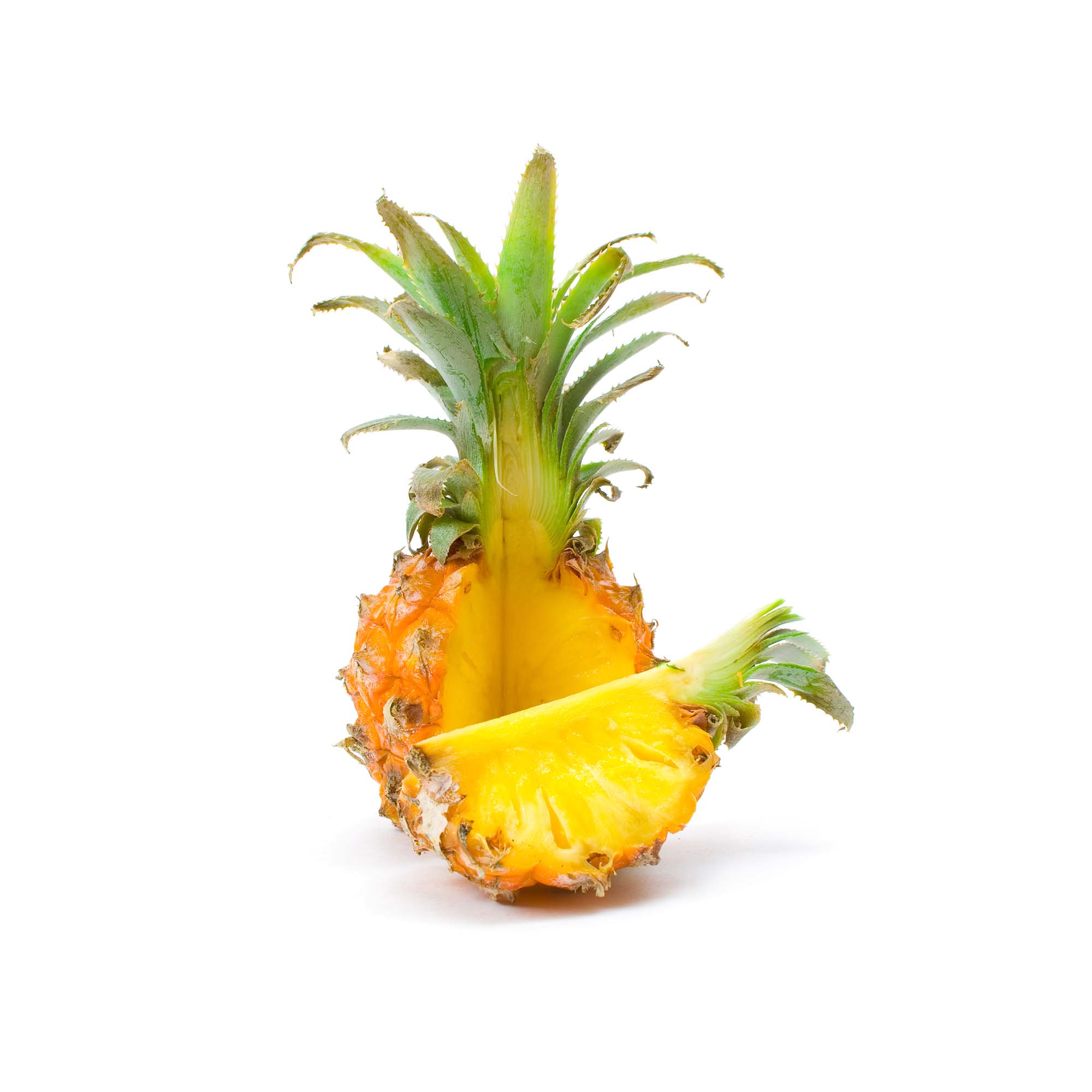
Entirely edible — core included. Sweeter, softer, lower-acid than the full-sized pineapple, and small enough that one fruit serves two people without leftovers. The crown is decorative, the flesh is dessert-grade, and the core is tender enough to eat without the wedge-and-discard ceremony.
Ripening & storage
Non-climacteric — eat as-is- Ripeness cue
- Crown leaves pull out easily; base smells distinctly tropical.
- Storage
- Room temp upside-down to distribute sugars; fridge once cut.
About Baby pineapple
The baby pineapple (a smaller cultivar of Ananas comosus) is grown almost exclusively in Costa Rica for the export market. Each fruit weighs around 400–600g — about a third of a standard pineapple — and the whole thing is edible, core to crown.
The sugar-to-acid ratio is the headline difference. Baby pineapples are noticeably sweeter and lower in the bromelain that makes regular pineapple bite the tongue, which means you can eat a whole one without that prickly enzyme afterglow. The core is soft enough to eat straight, no central wedge to discard.
Look for golden colour at the base and a sweet smell from the bottom of the fruit. Twist off the crown, top and tail, then either slice into rings or quarter lengthways. Eat fresh, grill briefly with rum, or blitz with lime for a 30-second sorbet. Skin not eaten.
Did you know?
- Indigenous to the Paraná–Paraguay river region between southern Brazil and Paraguay, long before European contact with the Americas.
- The 'Natal Queen' cultivar at 1.0–1.5 kg is a widely-grown baby pineapple; 'Smooth Cayenne' dominates bulk commercial production.
- Pineapples develop two interlocking spiral scale patterns with 8 and 13 rows — both Fibonacci numbers, like a sunflower's seed head.
Sources: Wikipedia
How to eat
Below are the general steps that work across most kitchens. The description above is the source of truth for any cultivar-specific detail — cross-check before you cut.
1. Check ripeness
Use the cues in the description above. As a rule, exotic fruits do most of their ripening off the tree — give them a day or two at room temperature if they feel firmer than expected.
2. Wash and chill
Rinse under cold water, pat dry, and chill before serving. Cold flesh holds shape better when sliced and brings the aromatic notes forward.
3. Cut, scoop or peel
Follow the technique described above. If in doubt, halve crosswise with a sharp knife and taste a spoonful before committing to a full prep.
4. Pair simply
A squeeze of lime, a pinch of salt, or a drizzle of honey will lift almost any tropical fruit. Match strong cheese, cured meats or yoghurt for a board; keep flavours minimal when the fruit is the star.
From the Pineapple family: Twist the crown off before storing — it actually helps the sugars settle through the flesh.
Buy this fruit
Sourced ripe and graded by hand. UK next-day delivery on every order placed before the daily cutoff.